Introduction
Heavy trucks move over 70% of all freight in the United States, transporting construction materials, agricultural products, and consumer goods across millions of miles daily. These specialized vehicles serve critical roles in construction, logistics, agriculture, and infrastructure development.
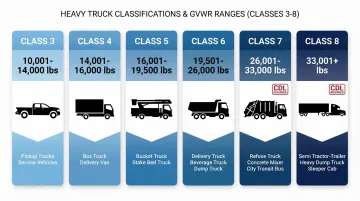
The industry classifies heavy trucks by gross vehicle weight rating (GVWR) into Classes 3-8, with each category carrying distinct regulatory requirements, licensing standards, and operational capabilities.
Beyond weight classifications, these trucks serve different functions:
- Long-haul transport for cross-country freight
- Construction work requiring dump beds and mixers
- Vocational applications like waste management
- Specialized cargo hauling with custom configurations
This guide explains weight classifications, functional truck types, and regulatory requirements to help you choose the right heavy truck for your business. You'll learn selection criteria that ensure compliance while maximizing efficiency.
Key Takeaways
- Classes 3-8 are determined by GVWR, with 10,001 lbs triggering federal CMV regulations
- Class 8 trucks move approximately 76.8% of U.S. freight revenue, making them the dominant force in American logistics
- CDL requirements depend on configuration—Class A for combinations over 26,001 lbs, Class B for single units
- Operating costs reached $2.27 per mile in 2023, with insurance premiums rising 12.5% year-over-year
- Match truck selection to cargo weight, route demands, and total ownership costs
What Are Heavy Trucks?
Heavy trucks are commercial vehicles with a GVWR exceeding 10,001 pounds (Class 3 and above), designed for transporting heavy cargo or performing specialized work. This 10,001 lb threshold is the definitive line that triggers federal commercial motor vehicle regulations, including USDOT registration and Hours-of-Service compliance.
These commercial workhorses differ from light-duty vehicles through several defining characteristics:
- Higher load capacity through reinforced frames and suspension systems
- More powerful engines ranging from 380 to 600+ horsepower
- Multiple axle configurations to distribute weight and maximize legal payload
- Commercial-grade durability engineered for continuous operation and high-stress cycles
Heavy trucks include delivery trucks, dump trucks, concrete mixers, refuse trucks, tractor-trailers, and specialized equipment haulers—each built for specific applications and regulatory environments.
Why Heavy Truck Classifications Matter
Understanding truck classifications isn't just technical knowledge—it's essential for legal compliance, operational safety, and cost management.
Licensing Requirements
Classifications determine which Commercial Driver's License (CDL) class your operators need. Any vehicle over 26,001 lbs requires a CDL. Class A CDL is mandatory for combination vehicles where the towed unit exceeds 10,000 lbs, while Class B covers single vehicles over 26,001 lbs. Hiring drivers without proper licensing exposes your business to substantial fines and liability.
Regulatory Compliance
Weight classes impact multiple regulatory requirements:
- Hours-of-Service (HOS) rules apply to all vehicles over 10,001 lbs in interstate commerce, limiting driving hours and mandating rest periods
- Weigh station requirements vary by state but generally apply to all commercial vehicles over 10,001 lbs
- USDOT number registration is mandatory for interstate operations with vehicles over 10,001 lbs
- Electronic Logging Device (ELD) mandates apply to most CMV operations
Safety and Cost Management
Proper classification prevents overloading, which compromises braking distance, tire integrity, and structural stability. Federal bridge formulas cap single axles at 20,000 lbs and tandem axles at 34,000 lbs, with gross weight limited to 80,000 lbs on Interstate highways.
Violations result in substantial fines, out-of-service orders, and increased insurance premiums. Beyond compliance, understanding classifications helps optimize your fleet—a Class 6 truck may be more cost-effective for local deliveries than a Class 8, reducing fuel costs and insurance premiums while meeting operational needs.
Types of Heavy Trucks by Weight Classification
The U.S. Department of Transportation categorizes trucks into 8 classes based on GVWR, with Classes 3-8 considered medium to heavy-duty vehicles.
Understanding these weight classes is fundamental for compliance, safety, and selecting the appropriate vehicle for your load requirements.
Class 3 Trucks (10,001-14,000 lbs)
The lightest category of medium-duty trucks, including heavy-duty pickup trucks (like Ford F-350, Ram 3500), small box trucks, mini-buses, and service vehicles.
Key characteristics:
- Typically feature single rear wheels or dual rear wheel (DRW) configurations
- May not require a full CDL in some states for intrastate operations
- Subject to federal CMV regulations when used in interstate commerce
- Common among small businesses and contractors
Best suited for: Small business deliveries, service vehicles, light construction equipment transport, local cargo hauling within city limits, and businesses transitioning from light-duty to commercial operations.
Class 4-6 Trucks (14,001-26,000 lbs)
Moving into true medium-duty territory, this range includes large box trucks, beverage delivery trucks, city delivery vehicles, and single-axle commercial vehicles. These three classes share similar operational profiles despite the weight spread.
Key characteristics:
- Typically feature dual rear wheels for improved stability and load distribution
- Require CDL Class B or C licenses depending on cargo type and passenger capacity
- Designed for frequent stop-and-go urban operations with lower fuel efficiency than highway trucks
- Commonly equipped with automatic transmissions for easier city driving
Best suited for: Food and beverage distribution, furniture delivery, local freight operations, utility company vehicles, ambulances, and businesses making multiple daily stops within metropolitan areas.
Class 7 Trucks (26,001-33,000 lbs)
Heavy-duty trucks that bridge medium and heavy categories, including refuse trucks, city transit buses, furniture trucks, tow trucks, and some tractor units used for regional hauling.
Key characteristics:
- Typically feature three-axle configurations to distribute weight and maximize payload
- Require CDL Class B for single vehicles; Class A if towing a unit over 10,000 lbs
- Built for durability in demanding urban and regional applications with frequent loading cycles
- Frequently have specialized bodies or equipment mounted directly on the chassis
Best suited for: Waste management operations, city bus routes, large delivery operations, heavy-duty tow trucks, and specialized municipal equipment like street sweepers and maintenance vehicles.
Class 8 Trucks (33,001+ lbs)
The heaviest truck category represents the workhorses of American commerce. This class includes tractor-trailers, cement mixers, heavy dump trucks, car carriers, tankers, and long-haul semi-trucks.
Key characteristics:
- Require CDL Class A for tractor-trailer combinations; Class B for straight trucks
- Feature multiple axle configurations (tandem, tri-axle, quad-axle) to maximize legal payload
- Designed for maximum payload capacity and long-distance durability
- Range from day cabs for regional work to sleeper cabs for cross-country operations
Best suited for: Long-haul freight transport, heavy construction (concrete mixers, large dump trucks), specialized hauling (car carriers, tankers), interstate commerce, and any operation requiring maximum payload capacity.
Class 8 trucks account for approximately 76.8% of the freight revenue market, with 2.9 million truck tractors traveling an average of 48,500 miles annually.
Types of Heavy Trucks by Function and Use
Beyond weight classifications, heavy trucks serve distinct operational purposes. Understanding these functional categories helps businesses select the right vehicle for their specific hauling needs.
Long-Haul Tractor-Trailers
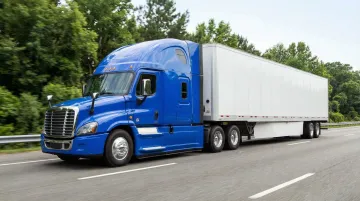
Class 8 trucks built for interstate freight transport, featuring powerful engines (400-600+ HP) that pull dry vans, refrigerated trailers, and flatbeds across the country.
Key features and configurations:
- Day cabs serve regional operations (usually within 250-mile radius), offering better handling and lower purchase cost
- Sleeper cabs accommodate long-haul routes, with federal regulations mandating berths at least 75 inches long and 24 inches wide for rest breaks
- Aerodynamic designs to maximize fuel efficiency on highway routes
- Advanced powertrains and transmission options (10-speed automatics increasingly common)
Primary users: Interstate freight companies, logistics providers, and businesses requiring cross-country cargo transport where maximum payload capacity and fuel efficiency matter most.
Dump Trucks
Heavy-duty trucks with hydraulic lift beds that transport and unload loose materials like gravel, sand, demolition waste, and construction materials.
Key configurations:
- Single-axle models (Class 6-7) offer lower capacity with better maneuverability for residential and light commercial work
- Tandem-axle models (Class 8) represent the standard heavy-duty configuration with 10-16 cubic yard capacity
- Tri-axle models (Class 8) carry maximum legal payload, with some configurations supporting GVWs up to 94,500 lbs in specialized applications
Additional axles increase payload capacity significantly while complying with federal bridge formulas, maximizing hauling efficiency per trip.
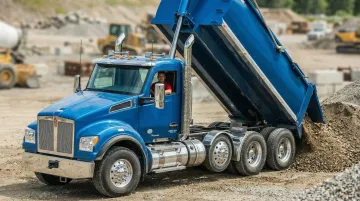
Ideal for: Construction companies, mining operations, landscaping businesses, roadwork contractors, and operations requiring frequent loading and unloading of bulk materials.
Vocational and Specialized Trucks
Purpose-built trucks serve specific industries with specialized equipment mounted directly on the chassis. Examples include concrete mixers, garbage trucks, fire trucks, tow trucks, crane trucks, and street sweepers.
Key characteristics:
- Engineered for specific operational demands (continuous mixing, hydraulic lifts, water pumps)
- Often require specialized operator training beyond standard CDL requirements
- Built on heavy-duty chassis platforms designed for high-stress cycles
- Usually have shorter service lives due to demanding operational conditions
Common applications: Municipalities, waste management companies, construction firms requiring on-site concrete mixing, emergency services, and industries with unique equipment requirements.
Flatbed and Lowboy Trucks
Trucks with open, flat cargo beds (flatbeds) or low-profile trailers (lowboys) haul oversized, heavy, or irregularly shaped cargo that cannot fit in enclosed trailers.
Key uses:
- Flatbed trucks transport construction materials, steel beams, lumber, machinery, and vehicles, with capacity up to 48,000 lbs
- Lowboy trailers feature extremely low deck heights for hauling tall equipment like bulldozers, excavators, and industrial machinery that would exceed height restrictions on standard flatbeds
- Both types require specialized securement training and often involve oversized load permits
Ideal for: Heavy equipment transport, steel and lumber industries, oversized load hauling, and operations requiring flexible loading from multiple sides.
Box Trucks and Straight Trucks
Medium to heavy-duty trucks (Class 4-7) where the cargo area integrates with the cab in a single frame, unlike tractor-trailer combinations that couple and uncouple.
Key advantages:
- Easier handling in urban areas with tighter turning radius
- Simpler operation without trailer coupling skills required
- Ideal for businesses with consistent, predictable cargo sizes
- Lower operating costs than tractor-trailers for appropriate applications
Primary users: Local moving companies, furniture delivery, retail distribution, food service suppliers, and businesses making frequent urban deliveries where full tractor-trailer capacity is unnecessary.
How to Choose the Right Heavy Truck
The "right" heavy truck depends on your specific cargo requirements, operational range, regulatory environment, and budget—not simply choosing the largest or most popular option. Making the wrong choice can result in unnecessary costs, compliance issues, and operational inefficiencies.
Selecting the right truck requires evaluating several critical factors that directly impact your operations and bottom line.
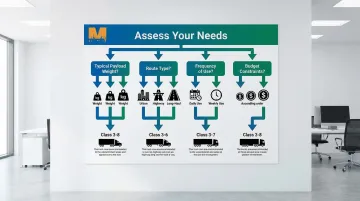
Factors to Consider When Selecting a Heavy Truck
Cargo weight and volume: Calculate your typical and maximum payload requirements to determine the minimum GVWR class needed. Don't oversize your vehicle—a Class 6 truck costs significantly less to operate than a Class 8 if it meets your needs.
Factor in both weight and cubic capacity, as you may "cube out" (fill the trailer volume) before reaching maximum weight.
Distance and route type considerations:
- Long-haul operations benefit from sleeper cabs, aerodynamic designs, and fuel-efficient powertrains
- Urban delivery requires shorter wheelbases, tighter turning radius, and automatic transmissions for frequent stops
- Regional operations work best with day cabs that balance comfort with maneuverability
Regulatory and licensing considerations: Ensure your drivers have appropriate CDL classifications before purchasing vehicles they cannot legally operate. Verify that your operations comply with Hours-of-Service regulations and state-specific requirements. Some states have additional restrictions on truck configurations, weights, and routes.
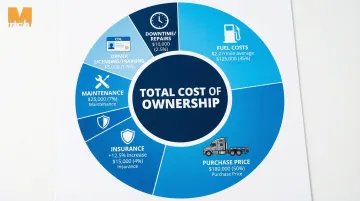
Total cost of ownership: Operating costs reached $2.27 per mile in 2023, with insurance premiums alone rising 12.5% to $0.099 per mile.
Compare not just purchase price but also fuel efficiency, maintenance costs, parts availability, insurance premiums, and resale value. A cheaper purchase price may cost more over the vehicle's lifespan.
Financing and acquisition options: Consider whether purchasing new, buying used, leasing, or renting makes more sense for your business. Explore financing options through specialized lenders who understand commercial vehicle operations. Companies like Mideast Equipment Supply can help businesses locate specific equipment types, provide financing options through multiple lenders, and offer complete service from inspection to export for international buyers.
Common Mistakes When Selecting Heavy Trucks
Avoid these common pitfalls when buying heavy trucks:
Choosing based on weight class alone
A Class 8 truck isn't always the answer if your operations are primarily local and a Class 6 would be more cost-effective. Match the truck's functional design to your actual operational needs—don't buy long-haul capability for short-haul routes.
Underestimating total cost of ownership
Purchase price is just the starting point. Consider these ongoing costs:
- Fuel efficiency and consumption rates
- Maintenance intervals and parts availability
- Insurance premiums
- Downtime and repair costs
A truck with a lower purchase price but poor fuel economy may cost significantly more over its service life than a more efficient alternative.
Ignoring driver qualification requirements
Purchasing vehicles your team cannot legally operate creates immediate compliance problems. Before acquiring any truck, verify your drivers have:
- Proper CDL classifications for the weight class
- Required endorsements (hazmat, tanker, doubles/triples)
- Time to complete additional training if needed
Factor licensing and training costs into your acquisition budget upfront.
Conclusion
Heavy trucks are classified by both weight (Classes 3-8) and function (long-haul, vocational, specialized), with each category serving distinct purposes in commerce and industry. Understanding these classifications helps businesses make informed purchasing decisions, ensure regulatory compliance, optimize operational efficiency, and improve safety outcomes.
The right heavy truck balances several critical factors:
- Payload requirements and operational range
- Regulatory compliance and licensing needs
- Total cost of ownership and maintenance
- Job-specific capabilities matching actual needs
Proper classification ensures you're not overpaying for unnecessary capability or underspecifying for your requirements.
If you're looking for quality used heavy trucks, Mideast Equipment Supply offers access to a global inventory with complete services from inspection to export. Their experience with international buyers and multiple financing options helps businesses find the right equipment whether operating locally or across borders.
Frequently Asked Questions
What are the different types of long-haul trucks?
Long-haul trucks are primarily Class 8 tractor-trailers with sleeper cabs, designed to pull various trailer types including dry vans, refrigerated trailers, flatbeds, and tankers. Configurations are chosen based on cargo requirements and federal regulations.
What do LCV, MCV, and HCV mean in truck classifications?
LCV stands for Light Commercial Vehicle (Classes 1-3), MCV means Medium Commercial Vehicle (Classes 4-6), and HCV represents Heavy Commercial Vehicle (Classes 7-8). These terms are more commonly used internationally and correspond to U.S. GVWR-based classifications.
What do 1500, 2500, and 3500 mean in truck model numbers?
These numbers in pickup truck models (like Ram 1500, Ford F-250) indicate payload capacity ratings. The 1500 typically represents half-ton capacity (Class 2), 2500 represents three-quarter-ton (Class 2-3), and 3500 represents one-ton capacity (Class 3).
What do TL and LTL stand for in trucking?
TL stands for Truckload (when a shipper's freight fills an entire truck) and LTL means Less-Than-Truckload (when multiple shippers share space). TL shipments are faster with direct routing, while LTL is more cost-effective for smaller freight volumes.
What is the difference between Class 7 and Class 8 trucks?
Class 7 trucks have a GVWR of 26,001-33,000 lbs and are used for refuse collection, city transit, and heavy towing. Class 8 trucks exceed 33,001 lbs and include tractor-trailers for long-haul freight, heavy construction equipment, and maximum payload applications.
Do I need a CDL to operate heavy-duty trucks?
Any vehicle over 26,001 lbs (Class 7-8) requires a Commercial Driver's License. Class A is needed for combination vehicles where the towed unit exceeds 10,000 lbs, Class B for single vehicles over 26,001 lbs, and Class C for hazmat or 16+ passengers.