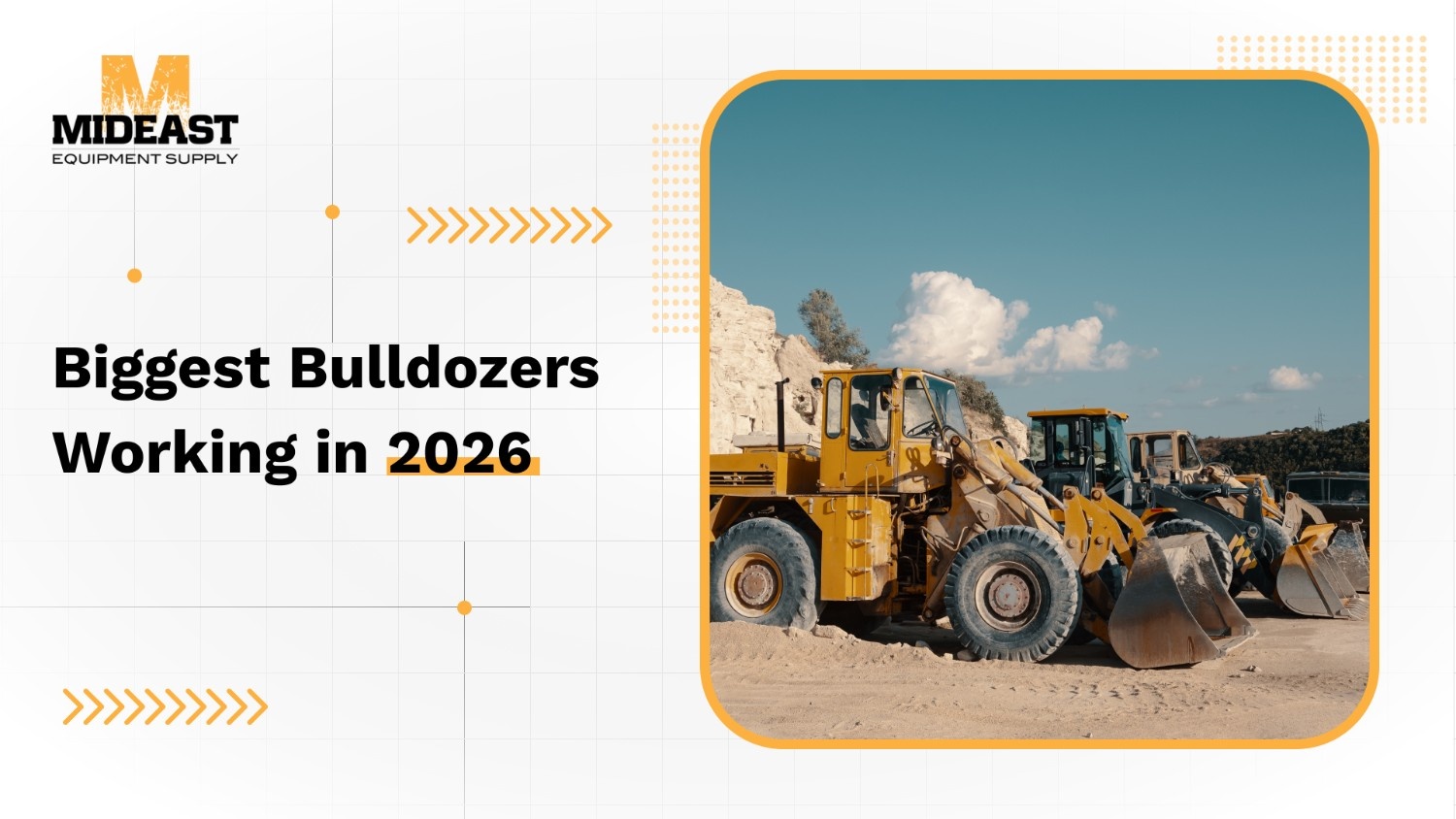
When people look for the largest bulldozers still in operation today, they are usually trying to separate machines that actually work on active job sites from those that exist only as prototypes or retired builds. The focus is on bulldozers that continue to operate in demanding environments such as mining, large-scale earthmoving, and infrastructure development, where sustained pushing power and durability matter more than record-setting dimensions.
Understanding which high-capacity bulldozers remain in service helps buyers and operators focus on equipment with proven performance rather than theoretical capability. This distinction becomes especially important when reviewing used machinery, where availability, condition, and operational history directly influence project feasibility and long-term value.
Demand for heavy earthmoving equipment remains closely tied to material production and extraction activity. According to the U.S. Geological Survey Mineral Commodity Summaries 2025, the United States produced 2.5 billion metric tons of crushed stone and 1.0 billion metric tons of construction sand and gravel in a single year, materials that depend heavily on large bulldozers for site preparation and extraction.
This guide highlights five of the largest bulldozers that continue to operate in real working conditions today, focusing on machines that remain relevant in some of the most demanding job sites worldwide.
Key Takeaways
“Biggest bulldozer working” means active, production machines, not experimental or retired models. Real job-site operation is the key qualifier.
Mining and large earthmoving projects are the primary use cases where ultra-large bulldozers deliver economic and operational value.
The Komatsu D575A-3 SD remains the largest bulldozer to work in real conditions, setting the benchmark for size and pushing capability.
Size alone is not enough. Operating weight, horsepower, blade capacity, and durability together determine sustained performance.
Evaluating large bulldozers is a lifecycle decision, where inspection history, service support, and remaining usable life matter more than headline specifications.
How the Largest Operating Bulldozers Are Classified
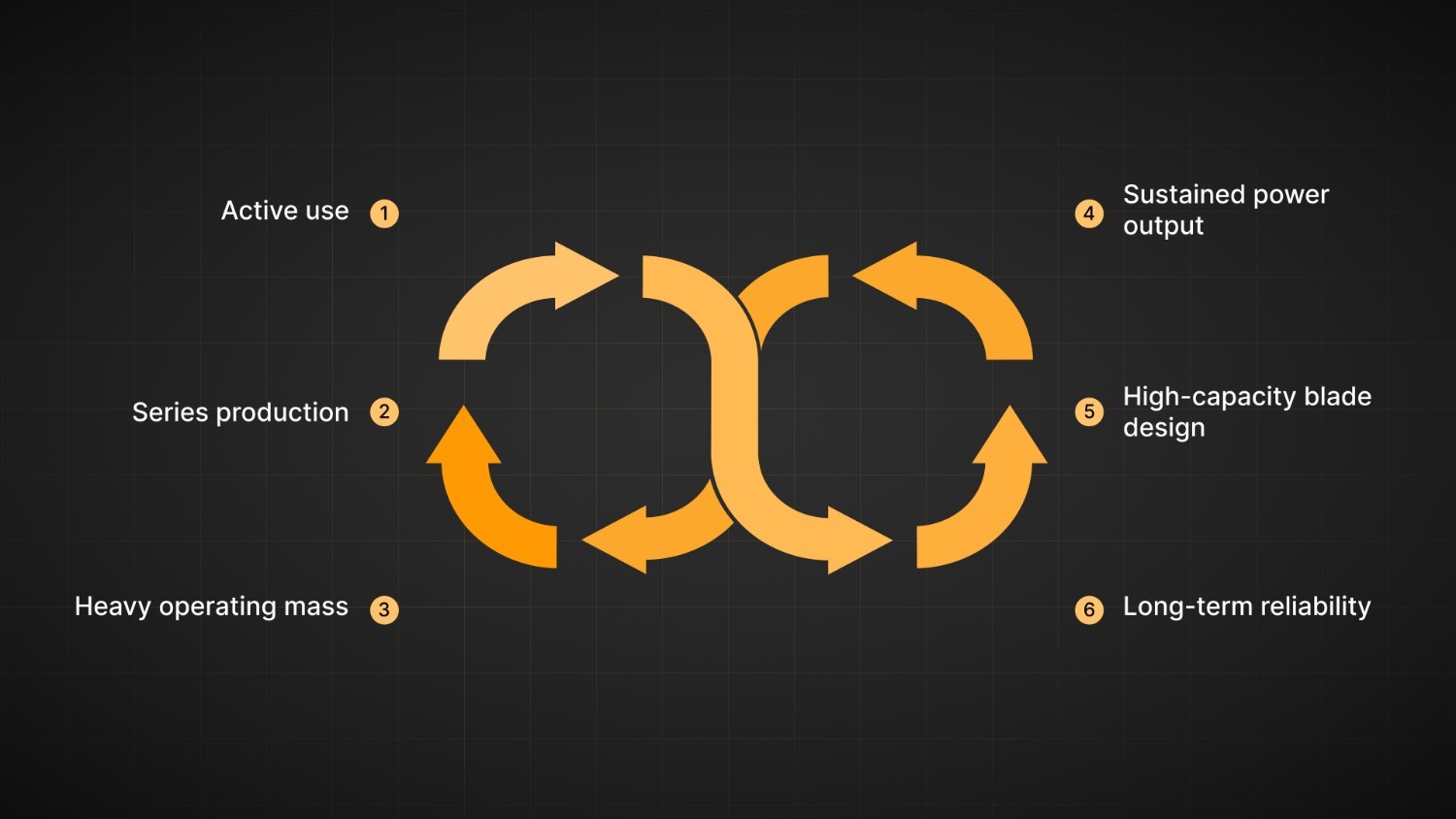
The distinction is not based on size alone. It applies to bulldozers that combine large-scale design with consistent, real-world operation on active job sites. Machines that exist only as prototypes or display builds are excluded, regardless of their dimensions.
A bulldozer is typically considered among the largest still in operation when it meets the following conditions:
Active use: Deployed on working sites such as mines or large earthmoving projects, not stored or retired
Series production: Manufactured as part of a production run rather than built as a one-off unit
Heavy operating mass: Designed to handle sustained workloads at the upper end of operating weight ranges
Sustained power output: Equipped with enough horsepower to support continuous pushing and ripping under load
High-capacity blade design: Capable of moving large material volumes efficiently per pass
Long-term reliability: Proven performance over extended operating cycles in demanding environments
Using these criteria keeps the focus on machines that provide real operational value, rather than those known only for record-setting specifications or theoretical capability.
Top 5 Biggest Bulldozers Working in the World Today
The bulldozers listed below are among the largest machines that are actively used in real operations, primarily in mining and large-scale earthmoving. These are not concept builds or retired models, but production machines designed for sustained heavy-duty work.
1. Komatsu D575A-3 SD
The Komatsu D575A-3 SD is widely recognized as the largest production bulldozer ever to operate in real working conditions. It was developed specifically for large mining operations where extreme pushing power and material movement are required.
Key specifications and characteristics:
Manufacturer: Komatsu
Operating weight: Approximately 150 metric tons
Engine output: Over 1,100 horsepower
Primary use: Surface mining and large-scale earthmoving
Blade capacity: Designed for moving very high volumes of material per pass
This bulldozer was built to handle continuous operation in demanding environments, particularly in open-pit mining where productivity depends on moving massive quantities of material efficiently. Its size and power place it in a category of its own, making it the benchmark when discussing the biggest bulldozer working today.
2. Caterpillar D11T CD
The Caterpillar D11T CD is one of the largest and most powerful bulldozers still widely used in active operations today. It is commonly deployed in mining and large earthmoving projects where reliability, sustained pushing power, and durability are critical.
Key specifications and characteristics:
Manufacturer: Caterpillar
Operating weight: Approximately 112 metric tons
Engine output: Around 936 horsepower
Primary use: Mining, heavy earthmoving, and large industrial sites
Blade capacity: Built for high-volume material movement in continuous operations
The D11T CD is designed for long-duty cycles and harsh environments, which is why it remains a standard choice in large mining fleets around the world. While it is smaller than the Komatsu D575A-3 SD, its balance of power, efficiency, and serviceability makes it one of the most practical examples of a biggest bulldozer working today.
3. Komatsu D475A-8
The Komatsu D475A-8 is one of the largest bulldozers still actively used in heavy earthmoving and mining operations. It is designed for high-production environments where durability and sustained power are essential.
Key specifications and characteristics:
Manufacturer: Komatsu
Operating weight: Approximately 113 metric tons
Engine output: Around 890 horsepower
Primary use: Surface mining, quarrying, and large-scale earthmoving
Blade capacity: Built to move large material volumes efficiently under continuous load
The D475A-8 is known for combining size with operational efficiency, making it suitable for projects that require consistent performance rather than peak output alone. Its continued use across mining sites reinforces its position as one of the biggest bulldozers working today.
4. Shantui SD90-C5
The Shantui SD90-C5 is among the largest bulldozers currently operating in industrial and large-scale earthmoving environments. It is built for heavy-duty applications where high horsepower and sustained pushing performance are required over long operating cycles.
Key specifications and characteristics:
Manufacturer: Shantui
Operating weight: Approximately 106 metric tons
Engine output: Around 950 horsepower
Primary use: Large earthmoving projects, mining, and industrial site preparation
Blade capacity: Designed for handling high material volumes in demanding conditions
The SD90-C5 stands out for its balance between size and modern powertrain design, making it suitable for operations that need extreme capability without stepping into ultra-specialized machines. Its presence in active projects places it firmly among the biggest bulldozers working today.
5. Liebherr PR 776 Litronic
The Liebherr PR 776 Litronic is the largest hydrostatic bulldozer currently in active operation. Unlike traditional powertrain designs, this model uses a hydrostatic drive system, making it well suited for applications that require precise control and consistent performance in demanding environments.
Key specifications and characteristics:
Manufacturer: Liebherr
Operating weight: Approximately 73 metric tons
Engine output: Around 760 horsepower
Primary use: Mining, large earthmoving projects, and site development
Blade capacity: Optimized for controlled material movement and high productivity
The PR 776 Litronic is widely used in mining operations where efficiency, maneuverability, and reliability are as important as raw size. While it is lighter than some mechanical-drive giants, its operational capability and continued use earn it a place among the biggest bulldozers working today.
Where the World’s Biggest Working Bulldozers Are Used
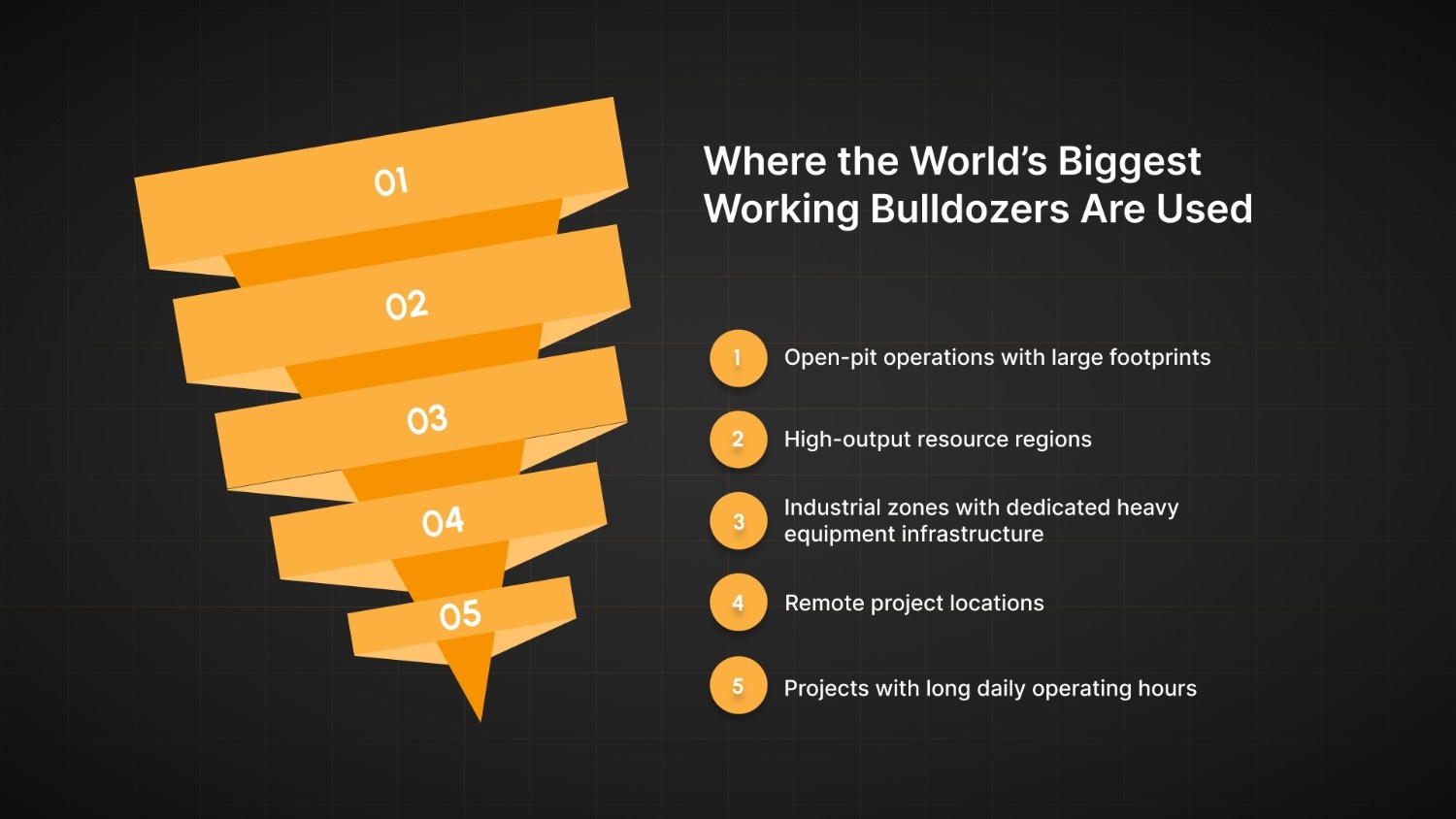
The world’s largest bulldozers are deployed only in a narrow set of environments where their scale can be justified economically and operationally. These machines are rarely seen on standard construction projects and are concentrated in regions and sites built for high-volume output.
They are most commonly used in:
Open-pit operations with large footprints: Sites that span several square kilometers and require continuous terrain reshaping benefit from fewer but extremely powerful machines.
High-output resource regions: Areas with long project timelines and stable production cycles support the sustained use of ultra-large bulldozers.
Industrial zones with dedicated heavy equipment infrastructure: These sites are designed to handle oversized machinery, including maintenance bays, transport access, and support equipment.
Remote project locations: In locations where mobilizing multiple smaller machines is impractical, larger bulldozers reduce fleet complexity.
Projects with long daily operating hours: These bulldozers are typically used where machines run for extended shifts over months or years rather than short-term phases.
Because of their scale, these bulldozers are usually assigned to fixed sites rather than moved frequently between projects. Their deployment is planned around long-term output requirements rather than short-term construction needs.
What Should You Know Before Buying or Evaluating Large Bulldozers
Evaluating large bulldozers involves considerations that go beyond standard equipment assessments. At this scale, decisions are driven by lifecycle impact rather than immediate capability.
Key factors to review include:
Inspection depth and documentation: Large bulldozers require detailed inspection records covering undercarriage wear, drivetrain condition, and major component life. Incomplete documentation can significantly increase post-purchase risk.
Parts availability and support timelines: Availability of components and lead times for replacements can affect downtime planning and should be verified before acquisition.
Total ownership cost visibility: Fuel consumption, overhaul intervals, and long-term service requirements influence overall cost more than initial purchase price.
Transport and compliance planning: Oversized equipment often requires special permits, route planning, and coordinated logistics, which must be factored into acquisition decisions.
Market availability cycles: Large bulldozers appear in resale and auction markets less frequently than standard models, making timing an important part of evaluation.
Project alignment: The machine’s remaining service life should align with project timelines to avoid underutilization or early replacement.
Focusing on these factors helps buyers assess whether a large bulldozer represents a practical investment rather than simply an impressive asset.
Conclusion
Evaluating the biggest bulldozers working today requires more than comparing size or headline specifications. At this scale, confidence comes from understanding how machines are inspected, documented, and positioned in the market. Clear condition reporting, verified service history, and realistic lifecycle assessment play a critical role when dealing with equipment that carries high replacement and operating costs.
A structured approach to heavy equipment transactions adds practical value in these situations. Mideast Equipment Supply supports buying, selling, consignment, and auction processes with an emphasis on equipment appraisal, detailed inspections, accurate listings, and coordinated logistics. This hands-on model helps align machine condition with market expectations, reducing uncertainty for both buyers and sellers.
For sellers, this approach supports realistic valuation and broader exposure through online and regional auctions. For buyers, it improves visibility into condition, documentation, and transport planning, all of which are essential when evaluating large bulldozers and other high-capacity machines. Services such as equipment locating, inspection support, and export coordination further strengthen decision-making across domestic and international transactions.
When equipment decisions involve some of the largest working bulldozers in the world, credibility is built through process clarity and execution rather than claims. Pairing technical understanding with transparent transaction practices allows buyers and sellers to move forward with confidence and long-term value in mind.
FAQs
Q: What is the world’s largest operating bulldozer?
A: The world’s largest operating bulldozer is the Komatsu D575A-3 SD, which remains the biggest production dozer to have worked in real mining operations. It was designed for large surface mines and heavy earthmoving environments.
Q: Is there a D12 bulldozer?
A: No, there is no Caterpillar D12 bulldozer currently in production or historical operation. The largest Caterpillar dozer model in regular use is the D11 series.
Q: How many Komatsu 575 dozers were made?
A: Komatsu produced fewer than 60 units of the D575A series, making it a very limited production machine. Most units were built for specific mining operations rather than general commercial sale.
Q: How much does a D11 bulldozer cost?
A: A new Caterpillar D11 bulldozer typically costs between USD 2.5 million and USD 3.5 million, depending on configuration. Used D11 models vary widely in price based on hours, condition, and attachments.
Q: Are large bulldozers available at auctions?
A: Yes, large bulldozers do appear at auctions, but far less frequently than standard models. Availability depends on mining fleet upgrades, project closures, and equipment lifecycle timing.