

Introduction
Choosing the right used semi truck in 2025 can make or break your bottom line. Many owner-operators and fleet managers struggle with unpredictable prices, inconsistent truck conditions, and the challenge of predicting long-term reliability—all while trying to maximize profitability in an increasingly competitive market.
The stakes are high. A smart purchase delivers years of dependable service and strong resale value, while a poor choice drains resources through unexpected repairs and downtime.
This guide helps you make that smart purchase by covering:
- Top used semi truck models for 2025
- Key buying factors that impact long-term value
- Where to find quality pre-owned trucks that meet your operational needs
Key Takeaways
- Freightliner Cascadia, Volvo VNL, Peterbilt 579, and Kenworth T680 lead reliability rankings for 2016-2022 models
- Target trucks with 300,000-500,000 miles—the sweet spot where depreciation has stabilized but major overhauls aren't yet due
- Budget $40,000-$90,000 for quality Class 8 trucks depending on age, mileage, and specifications
- Get pre-purchase inspections and review diagnostic codes to avoid $15,000+ in hidden repair costs
What Makes a Used Semi Truck a Smart Investment in 2025
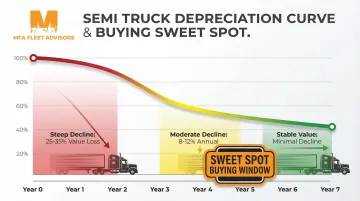
Used Class 8 trucks deliver 30-50% lower purchase prices compared to new models. Depreciation curves flatten significantly after the first 3-5 years.
New trucks lose 25-35% of their value in the first 12-18 months. Once a truck hits the 3-7 year mark, annual depreciation moderates to just 8-12%.
Current 2025 market conditions favor buyers:
- Average retail prices for used Class 8 trucks hover around $54,160, with 3-to-5-year-old sleeper trucks gaining an average of 2.7% in value each month throughout early 2025
- Dealer inventory has stabilized at around 47,000 units nationwide, up 19% year-over-year, restoring healthy selection
- Used truck sales surged 17% month-over-month in March 2025, with December 2025 retail sales up 15.7% month-over-month and 8.8% year-over-year
Beyond favorable pricing, proven models with 3-7 years of road time offer reliability advantages:
- Established track records make them less risky than first-generation technologies
- Known maintenance patterns let you anticipate service costs accurately
- Documented repair histories reveal exactly how previous owners maintained the truck
- Proven engine durability confirmed through real-world operating conditions
Top 7 Best Used Semi Trucks to Buy in 2025
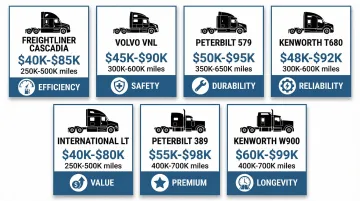
The following trucks earned their spots based on reliability ratings, parts availability, resale value retention, fuel efficiency, and driver satisfaction. Each model excels in specific hauling applications while offering proven long-term value.
Freightliner Cascadia (2017-2022 Models)
Freightliner dominates the used market with the Cascadia, the most popular semi truck in North America. Its aerodynamic design and Detroit engine options deliver proven fuel economy and widespread service support.
Why it stands out:
The Cascadia achieves 7-8 MPG in real-world conditions, backed by an unmatched service network through Daimler dealers across North America. The comfortable cab design reduces driver fatigue on long hauls.
Strong resale value retention protects your investment, and late-model Cascadias routinely hit 700,000-900,000 miles before requiring rebuilds.
| Feature | Details |
|---|---|
| Best Used Model Years | 2018-2020 models offer best value; avoid 2017 early DEF system issues |
| Ideal Mileage Range | 300,000-500,000 miles with documented maintenance |
| Average Price Range (2025) | $45,000-$75,000 depending on mileage and specs |
| Best For | Long-haul operations, fleet buyers, fuel-conscious operators |
Volvo VNL Series (2016-2021 Models)
Volvo stands out as the premium comfort choice with advanced safety features and D13 engine reliability for serious long-haul drivers.
Why it stands out:
Driver comfort features include excellent visibility, integrated safety systems like lane departure warning and collision mitigation, and strong build quality. Used VNL sleeper models typically retain 20% to nearly 30% more value than comparable trucks of the same age and mileage.
The D13 engine carries a B50 life of 1.2 million miles, meaning 50% of engines exceed this mileage without major overhaul.
| Feature | Details |
|---|---|
| Best Used Model Years | 2018-2021 VNL 760/860 models with I-Shift transmission |
| Ideal Mileage Range | 250,000-450,000 miles; Volvo engines known for 1M+ mile capability |
| Average Price Range (2025) | $50,000-$85,000 for well-maintained units |
| Best For | Long-haul drivers prioritizing comfort, safety-focused fleets |
Peterbilt 579 (2016-2021 Models)
Peterbilt's reputation for quality craftsmanship shines in the 579, which balances aerodynamics, fuel efficiency, and classic styling.
Why it stands out:
Extensive customization options let you spec the truck to your exact needs. The PACCAR MX engine delivers reliable performance, and premium interior quality ensures driver satisfaction.
Strong resale value makes the 579 a smart investment. These trucks can run 600,000 miles before requiring major component work.
| Feature | Details |
|---|---|
| Best Used Model Years | 2017-2020 models with PACCAR MX-13 engine |
| Ideal Mileage Range | 300,000-500,000 miles with comprehensive service records |
| Average Price Range (2025) | $55,000-$90,000 depending on configuration |
| Best For | Owner-operators wanting premium quality, regional haulers |
Kenworth T680 (2017-2022 Models)
Kenworth's T680 focuses on driver efficiency and fuel economy innovations, offering similar quality to Peterbilt with PACCAR's shared components.
Why it stands out:
Predictive cruise control optimizes fuel consumption, and PACCAR powertrain integration ensures smooth performance. Spacious cab layouts provide comfort for long hauls, plus excellent parts availability keeps maintenance costs manageable.
Many T680s hit 600,000-800,000 miles with only routine maintenance, achieving 7.2 MPG or better with the PACCAR MX engine.
| Feature | Details |
|---|---|
| Best Used Model Years | 2018-2021 models with 76-inch sleeper configurations |
| Ideal Mileage Range | 300,000-550,000 miles; known for durability |
| Average Price Range (2025) | $50,000-$85,000 for typical specifications |
| Best For | Long-haul operators, drivers prioritizing fuel economy |
International LT Series (2018-2022 Models)
International's LT series offers a cost-effective alternative to premium brands without sacrificing reliability, making it ideal for budget-conscious buyers.
Why it stands out:
Competitive pricing provides the lowest entry cost for quality Class 8 trucks. The Cummins X15 engine option delivers proven reliability, and easy serviceability keeps maintenance straightforward. The LT625 earned the 2022 Highest Retained Value Award, retaining 57.74% of its value after five years.
| Feature | Details |
|---|---|
| Best Used Model Years | 2019-2021 models after initial production refinements |
| Ideal Mileage Range | 250,000-450,000 miles with regular maintenance |
| Average Price Range (2025) | $40,000-$65,000 making it most affordable quality option |
| Best For | First-time owner-operators, budget-conscious fleet expansion |
Peterbilt 389 (2015-2020 Models)
The 389 represents the iconic traditional-styled truck for operators who want classic looks with modern reliability.
Why it stands out:
Owner-operators prize the 389 for its excellent visibility, hood-mounted design benefits for easier engine access, and strong enthusiast resale market. The Cummins X15 is the preferred engine for reliability. This "calling card" truck commands a premium but holds its value exceptionally well.
| Feature | Details |
|---|---|
| Best Used Model Years | 2017-2019 models with updated emissions systems |
| Ideal Mileage Range | 350,000-600,000 miles; built for longevity |
| Average Price Range (2025) | $60,000-$95,000 reflecting premium positioning |
| Best For | Owner-operators, specialized hauling, drivers wanting classic styling |
Kenworth W900 (2015-2021 Models)
Kenworth's legendary conventional model is favored for heavy-haul and vocational applications where durability matters most.
Why it stands out:
Exceptional durability in demanding conditions, powerful engine options, and ease of maintenance access make the W900 a workhorse. The timeless design appeals to traditional operators, and the cult following ensures strong resale value.
| Feature | Details |
|---|---|
| Best Used Model Years | 2017-2020 models with heavy-spec configurations |
| Ideal Mileage Range | 400,000-700,000 miles common for vocational use |
| Average Price Range (2025) | $55,000-$90,000 for heavy-haul specs |
| Best For | Heavy-haul operations, construction hauling, owner-operators |
Key Factors to Consider When Buying a Used Semi Truck
Mileage and Engine Hours
The sweet spot sits at 300,000-500,000 miles where trucks are broken in but not worn out. At this range, steepest depreciation has already occurred, but the truck has substantial service life remaining before major overhauls.
Evaluate engine hours relative to mileage:
- Highway trucks average 50-60 mph, yielding roughly 1 engine hour per 50-60 miles
- Local delivery trucks idle more, showing higher engine hours per mile (1 hour per 25-35 miles)
- Excessive engine hours relative to mileage indicates heavy idling or city work, which accelerates wear
Beyond 500,000 miles, depreciation accelerates and financing becomes restrictive. Major component failures like transmission rebuilds and aftertreatment system replacements become statistically probable.
Trucks exceeding 750,000 miles face sharp value drops unless major overhauls are documented.
Maintenance History and Service Records
Mileage alone doesn't tell the full story—maintenance history reveals how well the truck was cared for.
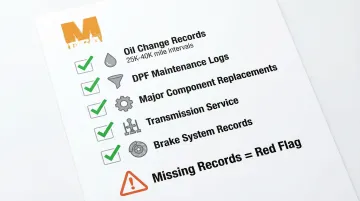
Complete service records predict future uptime more reliably than any other factor. Trucks with comprehensive documentation command a 5-10% premium but significantly reduce long-term risk.
Request complete service records and verify:
- Consistent oil changes at manufacturer-recommended intervals (typically every 25,000-40,000 miles)
- DPF maintenance and ash cleaning (critical for 2015+ models with emissions systems)
- Major component replacements (turbochargers, injectors, EGR valves)
- Transmission service and differential maintenance
- Brake system inspections and replacements
Missing maintenance records should raise immediate red flags.
Even if the seller claims maintenance was performed, lack of documentation makes verification impossible and increases your risk.
Pre-Purchase Inspection Essentials
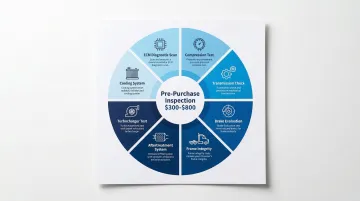
A comprehensive inspection costs $300-$800 but can save thousands in unexpected repairs.
Critical inspection components:
- ECM diagnostic scans for fault codes (both active and historical)
- Compression tests to verify engine condition
- Transmission condition assessment including fluid analysis
- Brake system evaluation (pad thickness, rotor condition, air system integrity)
- Frame integrity checks for cracks, especially at stress points
- Aftertreatment system condition (DPF, DOC, SCR components)
- Turbocharger operation and boost pressure verification
- Cooling system pressure tests
Total Cost of Ownership Beyond Purchase Price
Purchase price is just the beginning. Budget for ongoing costs that vary significantly between models.
Key TCO factors:
- Fuel efficiency differences: A 1 MPG difference costs roughly $6,000-$8,000 annually for a truck running 120,000 miles per year at current diesel prices
- Insurance rates: Older trucks with higher mileage typically cost less to insure, but liability coverage remains consistent
- Expected maintenance intervals: Budget 10-15% of purchase price annually for routine maintenance and repairs
- Parts availability: Popular models like Cascadia and T680 have widespread parts networks, reducing downtime and costs
Warranty and Protection Options
Extended warranties add 8-12% to purchase price but reduce risk through factory-backed coverage.
Available protection options:
- Kenworth Certified program requires trucks under 4 model years and 450,000 miles, offering 2-year/250,000-mile factory-backed warranty on PACCAR engines
- Peterbilt Red Oval provides similar factory-backed assurances and rigorous inspection standards
- Dealership warranties vary widely in coverage and terms
- Third-party extended warranties are available but read terms carefully—many exclude high-wear components
Where to Buy Used Semi Trucks
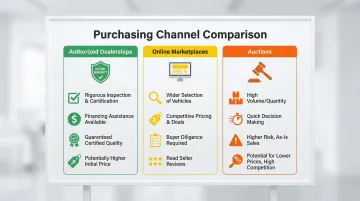
Three main purchasing channels serve different buyer needs: authorized dealerships, online marketplaces, and equipment auctions.
Authorized Dealerships and Equipment Dealers
Authorized dealers provide the most structured buying experience, offering pre-inspected inventory with documented maintenance history. Many specialized equipment dealers maintain global networks that can source specific truck models to match your operational requirements.
Dealer advantages:
- Pre-inspected trucks with known condition
- Certified pre-owned programs with factory warranties
- Financing assistance through captive lenders
- Trade-in options for your existing equipment
- Ongoing service relationships and parts support
These advantages translate to real-world value when working with established dealers. Mideast Equipment Supply, for example, provides comprehensive services from initial inspection through final delivery, with financing partnerships and a multi-location presence across the US that helps buyers secure the right truck for their operation.
Online Marketplaces and Auction Platforms
Digital platforms like TruckPaper, CommercialTruckTrader, and equipment auction houses have expanded buyer access significantly. These marketplaces provide wider inventory selection and transparent pricing, though they require more buyer diligence.
Online marketplace considerations:
- Broader inventory selection across multiple sellers
- Competitive pricing due to market transparency
- Ability to compare specifications and prices easily
- Always complete in-person inspections before purchasing—no exceptions
- Verify seller reputation through reviews and references
- Understand return policies and buyer protections
Auction platforms can yield competitive deals but demand careful due diligence and fast decision-making. The volume opportunity is significant: fleet sales represent approximately 62% of total used market volume, with auction sales surging 44% month-over-month in March 2025. This high-volume environment creates opportunities but also increases the importance of knowing exactly what you need before bidding.
How We Evaluated These Models
We analyzed reliability data from multiple industry sources and surveyed owner-operator feedback. Our methodology reviewed common repair issues by model year and evaluated parts availability across North America.
Evaluation criteria included:
- Total cost of ownership (fuel efficiency, maintenance, insurance, and resale value)
- Reliability ratings based on documented failure rates and owner satisfaction surveys
- Parts availability through dealer networks and aftermarket suppliers
- Resale value retention over 3-5 year ownership periods
We prioritized different factors based on application type. Long-haul operations emphasize fuel economy and comfort, while regional and vocational work demands durability and serviceability.
The "best" truck depends entirely on your use case. A Cascadia excels for over-the-road hauling, while a W900 shines in heavy-haul applications.
Conclusion
Choosing the right used semi truck in 2025 requires balancing upfront cost, reliability, and operational fit for your specific hauling needs.
The models highlighted here—Freightliner Cascadia, Volvo VNL, Peterbilt 579, Kenworth T680, International LT, Peterbilt 389, and Kenworth W900—represent proven performers with strong track records in the 2016-2022 model years.
Prioritize thorough inspections and maintenance history over getting the lowest price. A truck with complete service records and a clean inspection report at $65,000 delivers better long-term value than a $50,000 truck with unknown history and hidden problems.
When you're ready to buy, working with experienced dealers simplifies the process. Companies like Mideast Equipment Supply handle inspection coordination, financing arrangements, and delivery logistics for buyers across the US and international markets.
This end-to-end support helps you locate quality used trucks that match your operational needs and budget.
Frequently Asked Questions
What is the most reliable used semi truck to buy?
Freightliner Cascadia, Volvo VNL, and Kenworth T680 consistently rank highest for reliability in the 2016-2022 model years. However, reliability depends heavily on maintenance history rather than brand alone—a well-maintained International LT outperforms a neglected Peterbilt every time.
Which is better for a used semi truck: Peterbilt or Kenworth?
Both brands share PACCAR components and offer similar reliability. Peterbilt offers more customization and premium styling, while Kenworth emphasizes fuel efficiency and driver technology. Choose based on your specific operational needs rather than brand loyalty.
What mileage is too high for a used semi truck?
Mileage alone doesn't determine value. Well-maintained trucks regularly exceed 1 million miles, but buyers should be cautious above 600,000 miles without documented major component overhauls. Focus on maintenance history and inspection results rather than mileage numbers alone.
Should I buy a used truck with a rebuilt engine?
Rebuilt engines offer excellent value if done by reputable shops with warranties. Verify rebuild documentation, installer credentials, and warranty coverage—certified overhauls from major manufacturers typically include 1-3 year nationwide warranties.
How much should I budget for a used semi truck in 2025?
Budget $40,000-$90,000 for quality Class 8 trucks with 300,000-500,000 miles. Add an additional 10-15% for immediate maintenance needs, licensing costs, and initial repairs. Factor in ongoing costs like insurance, fuel, and regular maintenance when calculating total ownership costs.
What financing options are available for used semi trucks?
Specialized commercial lenders, equipment financing companies, and dealership financing are available. Down payments of 10-20% are typical, with terms structured around major overhaul milestones. Dealers like Mideast Equipment Supply work with multiple lenders offering first-time buyer programs and flexible financing options.