

Introduction
A single unexpected breakdown can cost you thousands in emergency repairs and lost productivity. Poor maintenance doesn't just create inconvenient downtime—it triggers emergency repairs, creates safety hazards, and slashes your equipment's resale value.
The good news? Well-structured preventive maintenance programs can reduce equipment downtime by up to 70%, transforming maintenance from a cost center into profit protection.
This guide covers the essentials of routine maintenance for heavy equipment:
- Why preventive maintenance protects your bottom line
- Maintenance approaches and their true costs
- Warning signs that demand immediate attention
- Practical scheduling strategies that work
- How documentation boosts resale value
Key Takeaways
- Preventive maintenance cuts downtime by 70% and extends equipment lifespan
- Routine tasks prevent breakdowns costing 3-4x more in emergency repairs
- Watch for unusual noises, leaks, vibration, and performance drops
- Schedule daily checks through annual overhauls based on conditions
- Documented maintenance boosts resale value by 15%
Why Routine Maintenance of Heavy Equipment Is Critical
Routine maintenance isn't just about keeping equipment running—it's a strategic investment that directly impacts your profitability, safety record, and asset value.
In demanding construction environments where machines operate under extreme loads, harsh conditions, and tight deadlines, a structured maintenance approach separates profitable operations from costly failures.
Performance and Productivity Impact
Well-maintained equipment operates at peak efficiency, completing tasks faster and consuming less fuel. When hydraulic systems are clean, filters are fresh, and components are properly lubricated, machines deliver consistent power and response.
Best-in-Class fleets that dedicate 21% of maintenance hours to preventive tasks experience significantly fewer down events per 1,000 operating hours. Typical operators allocate just 14.5% to preventive work, resulting in more frequent breakdowns.
The cost of neglect is clear: Equipment running with clogged filters, contaminated fluids, or worn components operates inefficiently, taking longer to complete the same work while burning more fuel and generating more heat.
Equipment Lifespan and Replacement Costs
These productivity gains translate directly into longer asset life. Routine maintenance can extend equipment life by 5-10 years, delaying the massive capital expenditure required for replacements. Skipping maintenance can reduce equipment lifespan by 40-50%, forcing premature retirement of assets that should have years of productive service remaining.
Cost comparison over 10 years:
- Well-maintained excavator: $200,000 purchase + $60,000 maintenance (2-3% annually) = $260,000 total, with 10+ year lifespan and strong resale value
- Neglected excavator: $200,000 purchase + $40,000 maintenance (minimal) + $150,000 in major repairs + $200,000 early replacement = $590,000 total
This pattern holds across equipment types. For tracked machines like bulldozers, lifetime maintenance and repair costs can equal 100% of the new purchase price, making every maintenance dollar a direct investment in extending that asset's productive life.
Safety and Compliance
Maintenance failures are a leading cause of job site accidents. Approximately 75% of struck-by fatalities involve heavy equipment, often linked to mechanical failures like brake malfunctions, hydraulic system failures, or structural issues that proper maintenance would have prevented. Regular inspection and servicing of critical safety systems—brakes, steering, hydraulics, and machine guarding—protects operators and ensures OSHA compliance.
Safety-related breakdowns also trigger investigations, work stoppages, potential fines, and insurance complications that far exceed the cost of preventive maintenance.
Preventive vs. Reactive Cost Savings
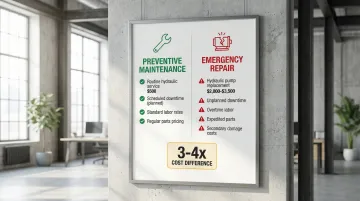
The financial case for preventive maintenance is straightforward: scheduled maintenance costs 3-4 times less than emergency repairs. When you service equipment on your schedule, you pay standard labor rates, order parts at regular pricing, and avoid operational disruptions.
Cost breakdown example:
- Routine hydraulic system service: $500 (fluid change, filter replacement, inspection during scheduled downtime)
- Emergency hydraulic pump replacement: $2,000-$3,500 (expedited parts, overtime labor, lost productivity, potential secondary damage)
Industry data confirms that every $1 of deferred maintenance generates $4-$7 in downstream costs through equipment damage and operational disruptions.
Resale Value and Equipment History
When it's time to upgrade or liquidate equipment, maintenance records directly impact what buyers will pay. Excavators with complete maintenance documentation sell for an average of 15% more than identical units without records.
Buyers—whether dealers, contractors, or international purchasers—view documented maintenance as proof of care and reliability. For a $50,000 excavator, that 15% premium translates to $7,500 in additional recovery, often exceeding the total maintenance cost over several years. Equipment dealers like Mideast Equipment Supply, which serves both domestic and international markets, consistently see higher demand and faster sales for equipment with complete service histories.
Types of Maintenance for Heavy Construction Equipment
Construction equipment requires different maintenance approaches depending on usage patterns, operating conditions, and how critical each asset is to operations. Understanding these approaches helps you allocate resources effectively and choose the right strategy for each asset.
Routine/Preventive Maintenance
Preventive maintenance follows scheduled intervals based on calendar time or operating hours—daily checks, 250-hour service, 500-hour service, annual inspections. This approach addresses wear before it causes failures.
Typical tasks include:
- Engine oil and filter changes
- Hydraulic fluid and filter service
- Air filter inspection and replacement
- Lubrication of grease points
- Visual inspections for leaks, wear, and damage
- Tire/track tension and condition checks
- Coolant system inspection
- Battery and electrical system checks
Best for: Standard operating conditions, equipment with predictable wear patterns, and following manufacturer-recommended intervals. For most construction fleets, preventive maintenance forms the foundation of reliability.
Cost range: $200-$800 per service depending on equipment size and service type. Annual comprehensive maintenance typically costs 2-3% of equipment replacement value.
Corrective/Reactive Maintenance
Reactive maintenance addresses failures after they occur: responding to breakdowns during operation or fixing issues identified during inspections. While some reactive work is inevitable, relying heavily on this approach creates significant risks.
Risks of reactive maintenance:
- Unplanned downtime halts projects and delays schedules
- Emergency repairs cost 3-4x more than scheduled service
- Secondary damage often occurs; overheated engines damage head gaskets, failed hydraulic pumps contaminate entire systems
- Safety hazards from sudden failures
- Lost productivity while waiting for parts and technicians
Emergency repair cost examples:
- Hydraulic pump replacement: $3,000-$8,000
- Engine overhaul: $15,000-$40,000
- Transmission rebuild: $8,000-$25,000
- Undercarriage replacement (dozer): $5,000-$15,000
Predictive/Condition-Based Maintenance
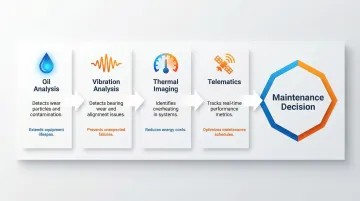
Predictive maintenance uses data and monitoring to service equipment only when indicators show it's needed, rather than fixed intervals. This approach optimizes maintenance timing and prevents unnecessary service.
Monitoring methods:
- Oil analysis: Reveals wear particles, contamination, and fluid degradation before visible problems appear
- Vibration analysis: Detects bearing wear, imbalance, and alignment issues
- Thermal imaging: Identifies overheating in electrical systems, hydraulics, and engines
- Telematics: Tracks performance metrics, fuel consumption, error codes, and operating patterns in real-time
Investment and ROI: Initial telematics hardware costs $50-$300 per unit, with monthly subscriptions of $10-$60 depending on features. Companies adopting predictive maintenance report 25-30% reduction in overall maintenance costs, with most fleets achieve positive ROI within 3-9 months through fuel savings, reduced idle time, and prevented breakdowns.
Major Overhauls and Rebuilds
Deep servicing extends equipment life when multiple systems show wear or when more economical than replacement. This includes engine rebuilds, transmission overhauls, and complete hydraulic system replacement.
Consider major overhauls when:
- After 8,000-15,000 operating hours (varies by equipment type)
- When repair costs approach 50% of current equipment value
- Multiple systems showing age-related wear
- Equipment still has strong structural integrity
Cost context: A certified machine rebuild typically costs 50-65% of new equipment price but extends life by 5-8 years. For a $200,000 excavator, a $100,000-$130,000 rebuild at 10,000 hours can deliver another 8,000+ hours of productive service, making itfar more economical than $200,000+ for new equipment.
Rebuilding also uses approximately 70% less raw materials than manufacturing new machines, offering sustainability benefits alongside financial advantages.
How to Tell If Your Equipment Needs Maintenance
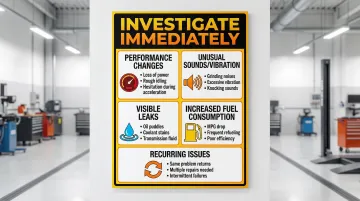
Catching maintenance needs early prevents complete failures and reduces repair costs. Train operators and maintenance staff to recognize these warning signs.
Performance or Output Changes
- Reduced power: Slower cycle times or difficulty with routine tasks like digging, lifting, or hydraulic response
- Inconsistent performance: Equipment that operates differently across conditions or shows gradual decline over recent weeks
- Difficulty starting: Engine that cranks longer than normal or requires multiple attempts
Unusual Sounds, Vibrations, or Operation
Pay attention to changes in how equipment sounds and feels:
- Grinding or knocking sounds indicating worn bearings, gears, or engine problems
- Squealing belts, hissing leaks, or rattling from loose components
- Excessive vibration: In cab, controls, or specific components indicating imbalance, worn mounts, or bearing failure
- Irregular operation: Hesitation during acceleration, surging under load, unexpected shutdowns, or rough idling
Visible Wear, Leaks, or Warning Indicators
- Fluid leaks: Hydraulic oil, engine oil, coolant, or fuel pooling under equipment or visible on components
- Dashboard warnings: Error codes, warning lights, or gauge readings outside normal ranges
- Cracked hoses, worn belts, or damaged seals
- Excessive play in joints, worn cutting edges, or loose fasteners
Increased Resource Consumption
- Higher fuel consumption: For the same work output, indicating engine inefficiency, hydraulic problems, or drivetrain issues
- Frequent fluid top-offs: Regularly adding oil, coolant, or hydraulic fluid suggests leaks or consumption problems
- Elevated operating temperature: Cooling system struggling to maintain normal temps, often visible on gauges or through telematics
Recurring Issues or Increased Downtime
- Repeated problems: If the same issue keeps occurring despite temporary fixes, an underlying problem requires proper diagnosis
- More frequent breakdowns: Increasing frequency of minor failures or need for adjustments
- Operator feedback: Reports that equipment "doesn't feel right" or requires workarounds to complete tasks
When operators mention these concerns, investigate immediately—their daily experience with equipment makes them the first line of detection.
Equipment Maintenance Schedule Guidelines
Maintenance schedules vary significantly based on equipment type, operating hours, environmental conditions, and workload intensity. Use manufacturer recommendations as your baseline, then adjust for your specific operating environment.
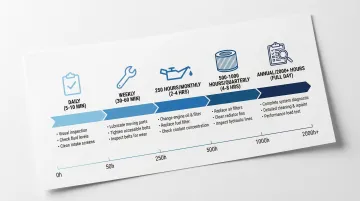
Maintenance Frequency Framework
Daily/Pre-Shift Checks (5-10 minutes):
- Walk-around visual inspection for damage or leaks
- Check fluid levels (engine oil, coolant, hydraulic fluid)
- Inspect tires or tracks for damage and proper tension
- Test controls, brakes, and safety features
- Clean lights, mirrors, and windows
Weekly Tasks (30-60 minutes):
- Detailed visual inspection of all systems
- Lubricate grease points on boom, bucket, and pivot points
- Check and clean air filters
- Inspect tracks or tires for wear patterns
- Test all hydraulic functions under load
- Check battery connections and fluid levels
Every 250 Operating Hours or Monthly (2-4 hours):
- Change engine oil and filter
- Inspect hydraulic system for leaks and damage
- Check belt tension and condition
- Lubricate all grease points
- Inspect undercarriage components (tracks, rollers, sprockets)
- Sample fluids for analysis if using predictive maintenance
Every 500-1,000 Operating Hours or Quarterly (4-8 hours):
- Replace fuel filters
- Inspect and service cooling system
- Check electrical system and connections
- Test all safety systems and emergency shutoffs
- Inspect structural components and welds
- Replace hydraulic filters
- Clean or replace air filters
Annual or 2,000+ Operating Hours (full day):
- Comprehensive inspection of all systems
- Change hydraulic oil and transmission fluid
- Replace coolant
- Detailed component testing and calibration
- Address any identified wear items
- Document condition for resale records
Adjustment Factors for Operating Conditions
The schedules above assume normal operating conditions. Harsh environments require more aggressive maintenance:
High-intensity operations (demolition, quarrying, heavy excavation):
- Reduce service intervals by 25-30%
- Increase inspection frequency to catch accelerated wear
- Monitor fluid condition more frequently
Harsh environments:
- Dusty conditions: Check and clean air filters 2x more frequently; inspect cooling packages weekly
- Coastal/corrosive: Inspect electrical connections and structural components monthly; wash equipment regularly
- Extreme cold: Use appropriate fluids; inspect hoses and seals more frequently; allow longer warm-up periods
- High heat: Monitor cooling systems closely; reduce service intervals by 20%
Light/intermittent use:
- Can extend some time-based intervals slightly, but never skip scheduled maintenance entirely
- Equipment sitting idle still requires periodic checks (fluid condition, battery maintenance, corrosion inspection)
Documentation Requirements
Maintain detailed maintenance logs for every asset:
- Date and operating hours for each service
- Specific tasks completed and parts replaced
- Technician name and any observations
- Fluid analysis results
- Photos of wear items or concerns
These records serve multiple critical purposes. They prove maintenance history for resale, help identify recurring issues, ensure warranty compliance, and demonstrate due diligence for safety audits.
When selling equipment through dealers like Mideast Equipment Supply, complete documentation can increase resale value by 15% or more by providing buyers confidence in the machine's history.
Conclusion
Routine maintenance is a business investment that protects your equipment assets and operational profitability. The data is clear: preventive maintenance reduces downtime by up to 70%, costs 3-4 times less than emergency repairs, and extends equipment lifespan significantly.
These benefits translate directly to fewer project delays, lower operating costs, and higher resale values when it's time to upgrade.
Finding the right balance matters. Over-maintenance wastes resources on unnecessary service, while under-maintenance risks expensive failures and safety hazards.
To optimize your approach:
- Use manufacturer guidelines as your baseline
- Adjust intervals based on your operating conditions
- Invest in condition monitoring for high-value assets
A structured maintenance plan keeps your equipment productive and protects your investment. Well-maintained machines with documented service history command premium prices in the resale market, whether selling through auctions, dealers, or private sales. That 15% resale premium often exceeds your total maintenance investment over multiple years—making proper equipment care one of the highest-ROI activities in your operation.
Frequently Asked Questions
What is routine equipment maintenance?
Routine maintenance includes regularly scheduled inspections, servicing, and minor repairs performed at set intervals based on operating hours or calendar time. This proactive approach prevents failures, maintains peak performance, and extends equipment lifespan.
How often should construction equipment be serviced?
Operators should perform daily pre-shift checks, weekly detailed inspections, and servicing every 250-500 operating hours. Major comprehensive services occur annually or every 2,000+ operating hours, with adjustments for harsh conditions.
What's the difference between preventive and predictive maintenance?
Preventive maintenance follows fixed schedules (every 250 hours, monthly, annually). Predictive maintenance uses condition monitoring data—oil analysis, vibration sensors, telematics—to service equipment only when indicators show it's needed.
How much does routine maintenance cost for heavy equipment?
Basic service intervals cost $200-$800, while annual comprehensive maintenance runs 2-3% of equipment replacement value. This prevents emergency repairs costing 3-4x more and extends equipment life by years.
What happens if I skip routine maintenance?
Skipping maintenance reduces equipment lifespan by 40-50%, voids warranties, and generates repair costs 3-4x higher than preventive service. It also reduces resale value by 15% or more and causes unexpected project delays.
Does maintenance history affect equipment resale value?
Documented maintenance records increase resale value by approximately 15% because buyers pay a premium for proven reliability. At Mideast Equipment Supply, well-documented service history makes equipment easier to sell and attracts buyers willing to pay market rates.