
Introduction
Proxibid connects nearly 1 million registered buyers to $4 billion in annual equipment inventory—from excavators and loaders to specialized machinery. Over 3,300 sellers use the platform to reach a global buyer pool.
The interface is straightforward, but winning consistently requires more than clicking "Bid." You need to understand auction timing, recognize bidder psychology, and calculate total costs beyond the hammer price.
Many first-time bidders struggle with unexpected fees, inadequate equipment research, or poor timing that costs them winning lots.
This guide covers:
- Account setup requirements and verification steps
- Step-by-step bidding procedures for live auctions
- Proven strategies to win without overpaying
- Common mistakes that drain budgets
- Equipment evaluation methods that prevent costly errors
Key Takeaways
- Online live auctions operate in real-time, combining bidders from physical and digital platforms
- Register 24-48 hours early and understand all terms before bidding
- Budget for total costs beyond hammer price—premiums, fees, and shipping add up
- Account for internet delay when timing your bids to avoid missing items
- Know equipment values beforehand—successful bidders target 70-85% of market price
How to Bid on Proxibid Live Auctions
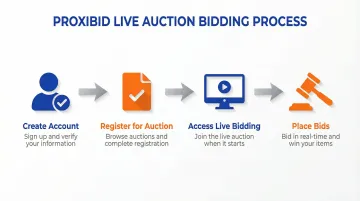
Step 1: Create and Verify Your Proxibid Account
Account creation requires email verification and a valid credit card to validate your identity. Complete this process at minimum 24-48 hours before auction day, not the morning of the sale.
For high-value construction equipment, expect additional verification requirements:
- Bank letters of guarantee for large purchases
- Credit card holds before bid approval
- Extended processing times (up to 48 hours)
Early registration prevents last-minute disqualification from your target lots.
Step 2: Register for the Specific Auction Event
Each auction requires separate registration beyond your general Proxibid account. Sellers maintain individual approval requirements, and processing times vary from a few hours to two business days.
Review the auction's Terms of Sale thoroughly before registering. This document outlines:
- Buyer's premium percentage (typically 10-14%)
- Accepted payment methods and deadlines
- Equipment pickup windows and storage fees
- Applicable sales tax rates
- Penalties for non-payment
Payment deadlines are strict. Most auctions require full payment within 24-48 hours via wire transfer or certified check.
Equipment removal typically must occur within 7 days, with storage fees of $10-25 per day adding up after that window.
Step 3: Access the Live Bidding Application When Auction Goes Live
When the auction starts, the "Enter Live Auction" button activates on the event page. Click it to access the live bidding interface.
Enable the bid lock feature immediately. This prevents accidental bids while you're browsing lots. The BID button remains locked until you toggle "Enable Bidding" on.
The platform provides audio/video streams showing the auction floor, but these may lag by 0.5 seconds or more depending on your connection.
Rely exclusively on the bid panel for accurate real-time information, not the video feed. The bid panel displays current asking price, your bidding status, and the critical "Once-Twice-Sold" indicator.
Step 4: Place Bids During the Live Auction
When ready to bid, click the orange BID button at the displayed asking price. A confirmation popup appears—you must click "Confirm" before your bid submits to the auctioneer.
Watch the "Once-Twice-Sold" indicator bar at the bottom of the lot display. This visual countdown shows the auctioneer's progress toward closing the lot:
- Clear/Yellow: Bidding is active, plenty of time remains
- Green "Once": Auctioneer is giving final warning
- Red "Twice": Last chance before hammer falls
- "Sold": Lot closes
Place bids before the indicator reaches green "Once" to ensure your bid registers. Unlike timed auctions, live events have no automatic time extensions.
When the hammer falls, the lot closes instantly.
Winning Strategies for Proxibid Live Auctions
Consistent winners understand that success requires strategy, patience, and auction psychology knowledge beyond fast clicking.
Use Pre-Bidding Strategically (But Not Always)
Pre-bidding lets you submit maximum bids before the live event starts. The system acts as your proxy, bidding incrementally up to your maximum during the live sale.
When to pre-bid:
- You cannot attend the live auction
- You want to establish a floor price on lower-competition items
- You're bidding on multiple lots and need automation
When to wait for live bidding:
- The equipment is highly competitive with multiple interested parties
- You want to assess competitor intensity before committing
- You prefer to react to sudden activity drops or passed lots
Pre-bids reveal your interest to competitors and may drive up starting prices. Save your maximum for live bidding on high-value items where you need flexibility.
Watch the Auction Pace and Bidder Behavior
Once bidding begins, monitoring the auction's rhythm gives you critical intelligence. Watch how quickly lots sell and identify active competitors by their bidder numbers to adjust strategy in real-time.
Key indicators:
- Items consistently selling over estimate signal fierce competition
- Rapid-fire bidding between two numbers indicates a bidding war
- Slow auctions with passed lots suggest opportunity for negotiation
- Multiple lots from one bidder show they're buying for inventory, not immediate use
If equipment regularly exceeds fair market value by 10-15%, competition has triggered "auction fever"—emotional bidding that drives irrational prices. Adjust your budgets or wait for better opportunities.
Master the Timing of Your Bids
Beyond watching others, controlling when you bid creates tactical advantages. Strategic timing prevents giving competitors time to react and counter-bid.
Place bids when the indicator shows yellow or early green. Waiting until red "Twice" risks missing the window entirely due to network latency or a quick hammer. The auctioneer controls the pace, and some close lots faster than others.
Practice timing on lower-value items first. Build confidence with the rhythm before applying the technique to major purchases.
Set Firm Budget Limits and Stick to Them
Even perfect timing means nothing if you overpay. Calculate total cost before entering the auction. Your maximum bid should account for:
- Hammer price (winning bid)
- Buyer's premium (10-14% typical)
- Internet fee (2-5% additional)
- Sales tax (varies by jurisdiction, often 6-9%)
- Transportation and rigging costs
- Immediate repairs or refurbishment
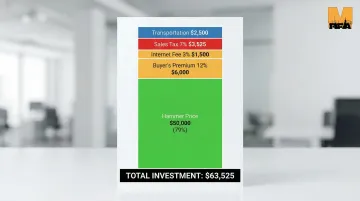
Example calculation:
- Hammer price: $50,000
- Buyer's premium (12%): $6,000
- Internet fee (3%): $1,500
- Sales tax (7%): $3,525
- Transportation: $2,500
- Total investment: $63,525
Write down your maximum bid per item before the auction starts. Refuse to exceed it regardless of competition. Research shows that auction fever and competitive arousal can drive prices 10-15% above rational valuations, leading to buyer's remorse and unprofitable purchases.
What You Need Before Bidding on Proxibid
Preparation directly impacts success rates and prevents costly mistakes or disqualification from auctions.
Account Requirements and Seller Approval
Before auction day, ensure you have:
- Verified Proxibid account with confirmed email
- Event-specific registration approval from the seller
- Valid payment method on file (credit card or bank information)
- Any seller-required documentation (business license, tax ID, bank letter)
If you plan to finance your purchase, start early. Sellers like Mideast Equipment Auctions work with approved lenders, but approval can take several business days.
Equipment Research and Inspection
Review all available information for each item on your watchlist:
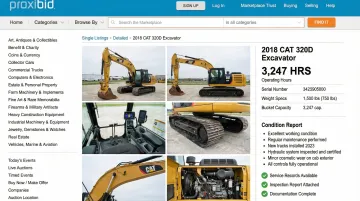
- Every photo for visible damage, wear patterns, rust, leaks, tire condition
- Equipment descriptions for disclosed issues or operational status
- Serial numbers, hour meters, year, make, and model
- Available inspection reports or condition statements
Contact the seller directly with specific questions about equipment condition, recent repairs, or operational history. Many sellers welcome inquiries and can provide additional videos or arrange in-person inspections.
Physical inspection remains the gold standard. If you cannot visit the site, consider hiring a third-party inspector.
Critical warning: All items sell "As-Is, Where-Is" without warranty. You assume all risk immediately upon the fall of the hammer.
Common Mistakes That Cost You Auctions
Even experienced bidders make errors that result in lost opportunities or paying more than necessary.
Failing to Read Terms of Sale Thoroughly
Terms of Sale contain critical information that varies significantly between sellers. Assuming standard terms across all auctions leads to unexpected costs or lost deposits.
Key details buried in Terms of Sale:
- Buyer's premium rates (range from 10-18%, sometimes with caps)
- Payment deadlines (often 24-48 hours, not "when convenient")
- Accepted payment methods (many don't accept credit cards without fees)
- Pickup windows and daily storage fees after deadline
- Required insurance certificates or authorized rigger specifications
One seller might cap buyer's premium at $2,000 per item while another charges 15% on the full amount. That difference on a $100,000 excavator equals $13,000 versus $15,000—substantial impact on your budget.
Bidding Without Researching Equipment Value
Emotional bidding or urgency without knowing fair market value leads to overpaying. Some bidders rely on "gut feel" rather than data, especially in fast-paced live auctions.
Before setting your maximum bid:
- Check recent sold prices on Proxibid for comparable equipment
- Research dealer retail prices for the same make, model, and year
- Adjust for equipment hours and visible condition
- Review industry valuation guides like EquipmentWatch
Set your maximum at 70-85% of fair market value for used equipment. This buffer accounts for unknown issues, buyer's premium, and leaves room for profit if you're a dealer or value retention if you're an end-user.
Ignoring Total Cost of Ownership
Your winning bid covers only part of the total investment. Many bidders focus exclusively on the hammer price and face budget shock when additional costs pile up.
Hidden costs that inflate final investment:
- Transportation (can exceed 10% of equipment value for oversized loads)
- Rigging and load-out (some sites require authorized riggers with $2M liability coverage)
- Immediate repairs or refurbishment
- Sales tax on hammer price plus buyer's premium
- Storage fees if you cannot remove equipment within the deadline
- Insurance (coverage should begin immediately upon winning)
A $50,000 excavator easily becomes a $60,000+ investment after transportation, buyer's premium, tax, and minor repairs. Budget for the total, not just the hammer price.
Poor Timing Strategy During Live Bidding
Bidding too early reveals your interest and invites competition. Waiting too long risks missing the lot entirely due to network latency or a quick auctioneer.
Equally problematic is rapid-fire bidding against yourself. Network delays can cause your first bid to process slowly. Clicking repeatedly submits multiple bids, driving up the price against yourself before competitors even respond.
Place one bid at a time and wait for confirmation before clicking again.
Not Setting Maximum Bid Limits in Advance
Entering auctions without predetermined limits leads to emotional overbidding and buyer's remorse. The competitive environment, countdown pressure, and desire to "win" override rational decision-making.
Write down your maximum bid per item before the auction starts, including all costs in this calculation. Once you reach your limit, stop bidding regardless of how close you are to winning. There will always be another auction and another piece of equipment.
Tips for Evaluating Construction Equipment Before Bidding
Proper equipment evaluation prevents expensive mistakes and ensures you're bidding on assets that meet your project needs.
Review All Available Documentation and Photos
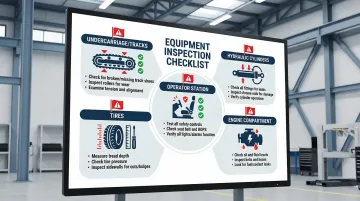
Examine every photo systematically:
- Undercarriage and tracks: Look for excessive wear, broken links, or damage
- Hydraulic cylinders: Check for leaks, rust, or bent rods
- Tires: Assess tread depth and sidewall condition
- Engine compartment: Look for oil leaks, damaged hoses, or missing components
- Operator station: Check for broken controls, damaged seats, or missing gauges
Read descriptions carefully for disclosed issues like "engine smokes," "hydraulics slow," or "needs repair." These phrases signal significant problems that impact value.
Note equipment hours, year, make, model, and serial number. Research that specific model for common problems, maintenance requirements, and typical lifespan.
High engine hours significantly impact value—a machine with 8,000 hours has far less remaining life than one with 2,000 hours.
Contact the Seller for Additional Information
Before placing your bid, reach out to the seller with specific questions. Reputable sellers welcome inquiries and provide additional details to help buyers make informed decisions.
Questions to ask:
- Is the equipment currently operational?
- When was it last used and for what type of work?
- What repairs or maintenance have been completed recently?
- Are there any known issues not disclosed in the listing?
- Can you provide additional photos or videos of specific areas?
- Is in-person inspection possible before auction day?
Experienced auction houses maintain extensive industry contacts and deep knowledge about construction equipment. For example, Mideast Equipment Auctions works with dealers, contractors, and wholesalers worldwide, giving them insight into equipment history and market conditions that can help you assess whether a piece fits your project needs.
Calculate Fair Market Value and Set Your Maximum
Once you've reviewed the equipment details and contacted the seller, it's time to determine what you should pay. Fair market value (FMV) represents the price a willing buyer and seller would agree upon in an open market. Establish this before bidding to avoid overpaying.
Valuation methodology:
- Research recent sold prices for comparable equipment (same make, model, year, similar hours)
- Check dealer retail prices and adjust downward for auction context
- Factor in equipment condition based on photos and descriptions
- Consider market demand for that specific equipment type
Set your maximum bid at 70-85% of FMV for used equipment. This buffer accounts for:
- Unknown mechanical issues not visible in photos
- Buyer's premium and additional fees
- Transportation and refurbishment costs
- Profit margin if you're a dealer
- Value retention if you're an end-user
A disciplined approach to valuation protects your budget and ensures profitable purchases.
Frequently Asked Questions
How does bidding work on Proxibid?
Proxibid connects online bidders to live and timed auctions where they compete in real-time. You submit bids through the platform, which the auctioneer (live) or system (timed) processes, with the highest bidder winning each lot.
How does Proxibid live auction work?
Live auctions run in real-time with an auctioneer taking bids from both online (Proxibid) and onsite participants. You watch via streaming video and bid through the live application, which transmits your bids to the auctioneer instantly.
What is the 3 minute rule at auction?
The "3 minute rule" refers to extended bidding in timed auctions—if a bid comes in during the final minutes, closing time extends by 3 minutes to prevent sniping. Live auctions have no such extension; the auctioneer's hammer is final.
Is it better to bid early or late?
In live auctions, bidding in the final seconds prevents competitors from counter-bidding. Early pre-bids work when you can't attend live, but they reveal your interest to competitors.
Can you see past auctions on Proxibid?
Yes, you can view past auction results and sold prices by searching completed events. Navigate to a seller's page, select "Show Archived Events," then "View Results." This data is valuable for researching fair market values before bidding.
What is a maximum bid and how does it work?
A maximum bid is the highest amount you're willing to pay. Proxibid's system automatically bids on your behalf in increments up to that maximum, stopping when you're the high bidder or your maximum is reached. This prevents you from missing lots while allowing budget control.