Introduction
Choosing the wrong trailer type creates immediate operational problems: damaged cargo, regulatory violations, wasted fuel, and costly delays at loading docks. With trucking accounting for over 70% of all freight transported in the United States, these mistakes compound quickly across fleet operations.
Fleet managers and owner-operators face a critical equipment decision that directly impacts profitability, safety, and regulatory compliance.
Each trailer type is designed for specific cargo characteristics, loading methods, and transportation requirements—from temperature-controlled pharmaceuticals to 80,000-lb construction equipment. Understanding these differences prevents expensive mismatches and keeps operations running efficiently.
Key Takeaways
- Seven primary trailer types serve distinct cargo needs: dry vans, flatbeds, reefers, lowboys, step decks, dump trailers, and tankers
- Trailer selection depends on cargo dimensions, weight, loading infrastructure, and regulatory requirements
- Federal weight limits cap trailers at 80,000 lbs gross, with payload varying by type (42,000-48,000 lbs)
- Wrong trailer selection causes damaged cargo, safety violations, and operational inefficiencies
- Used trailers offer cost savings compared to new equipment
What Are Semi Truck Trailers?
Semi truck trailers are unpowered freight-carrying units that attach to a tractor via a fifth-wheel coupling mechanism. Unlike full trailers with front and rear axles, semi-trailers have axles only at the rear and rely on the tractor for front-end support.
This design difference sets semi-trailers apart structurally and legally. According to 49 CFR § 390.5, a semi-trailer is "any motor vehicle, other than a pole trailer, which is designed to be drawn by another motor vehicle and is constructed so that some part of its weight rests upon the self-propelled towing motor vehicle."
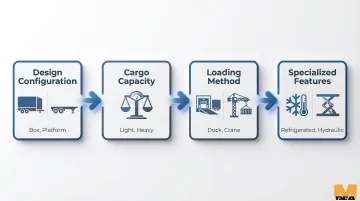
The industry categorizes trailers based on four primary factors:
- Design configuration: enclosed boxes or open platforms
- Cargo capacity: weight and volume limits
- Loading method: rear-only, side access, or full perimeter access
- Specialized features: refrigeration, hydraulic dumping, or liquid containment systems
Why Are Semi Truck Trailers Important in Freight Transportation?
Choosing the right semi trailer affects your bottom line, cargo safety, and regulatory compliance. The wrong match creates delays, damage, and potential fines.
Cargo Protection & Integrity The right trailer protects your cargo:
- Reefers maintain temperature control for pharmaceuticals and food shipments
- Enclosed dry vans shield electronics from weather and theft
- Specialized trailers prevent damage during transport
Mismatched trailers compromise product quality and create costly liability claims.
Fuel Efficiency & Operating Costs Trailer choice directly impacts operating costs:
- Aerodynamic designs reduce fuel consumption on long hauls
- Refrigerated units add fuel costs for temperature systems
- Lightweight aluminum flatbeds maximize payload within the 80,000-lb federal weight limit
Loading Speed & Infrastructure Compatibility Different trailers work with different loading setups. Rear-loading dry vans need dock-height facilities, while flatbeds allow crane loading at ground level. Mismatches create delays and force expensive workarounds.
Regulatory Compliance Federal regulations govern specific cargo types. Food transport requires temperature monitoring under FDA rules, while hauling liquids demands special tanker endorsements. Non-compliance leads to fines, rejected shipments, and potential shutdowns.
Types of Semi Truck Trailers
The semi trailer market offers seven primary types, each built for specific cargo and loading requirements. Choosing the right trailer type directly impacts your operational efficiency, payload capacity, and compliance costs.
Understanding these distinctions helps you match equipment to your hauling needs—whether you're buying used inventory or expanding your fleet. Here's what separates each type:
Dry Van Trailers
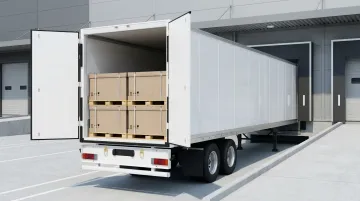
Dry vans are the workhorses of freight hauling. These fully enclosed, box-shaped trailers protect cargo from weather and theft while handling the widest range of general freight.
Best suited for:
- Non-perishable consumer goods and retail merchandise
- Packaged products and palletized freight
- Electronics and household goods
- Building products requiring weather protection
Key strengths:
- Most common trailer type with widespread availability for rent and purchase
- Easy loading at standard dock heights (48-50 inches)
- Excellent cargo security with lockable rear doors
- Suitable for LTL (less-than-truckload) shipping and mixed loads
- Compatible with existing warehouse infrastructure
Limitations:
- Cannot accommodate oversized cargo exceeding 8.5 ft width or 9 ft height
- No temperature control for perishable goods
- Limited to rear loading (some models offer side doors)
- Not suitable for top-loading or irregularly shaped freight
Typical specifications:
- Length: 48-53 feet (53 ft is industry standard)
- Width: 8.5 feet (102 inches)
- Interior height: 9 feet (110 inches)
- Maximum freight weight: 42,000-45,000 lbs
Flatbed Trailers
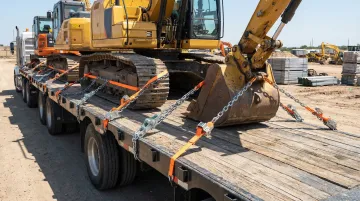
When cargo won't fit through a door, flatbeds solve the problem. These open platforms provide 360-degree access for loading from any angle.
Best suited for:
- Construction materials (lumber, steel beams, piping)
- Heavy machinery and industrial equipment
- Large equipment requiring crane or forklift loading
- Oversized items that won't fit in enclosed trailers
Key strengths:
- Maximum loading flexibility from all sides and top
- Handles wide and tall cargo up to legal limits
- Easy securement with chains, straps, and binders
- Ideal for irregularly shaped freight
- Higher payload capacity (48,000 lbs) due to lighter tare weight
Limitations:
- No weather protection—cargo exposed to rain, snow, and road debris
- Requires tarping for moisture-sensitive materials
- Limited theft protection for valuable cargo
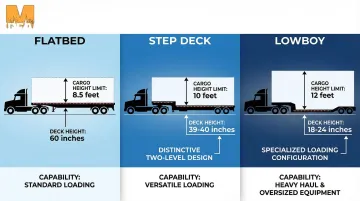
- Freight height restricted to 8.5 feet (vs. 10+ feet for step decks)
Typical specifications:
- Length: 48-53 feet
- Width: 8.5 feet (102 inches)
- Deck height: 60 inches (5 feet) off ground
- Maximum freight weight: 48,000 lbs
Refrigerated (Reefer) Trailers
Reefers maintain precise temperatures for perishable cargo. These insulated trailers use onboard refrigeration units to keep products within a specific temperature range throughout the haul.
Best suited for:
- Frozen and fresh food products (meat, produce, dairy)
- Pharmaceuticals and medical supplies
- Flowers and cosmetics
- Any cargo requiring temperatures from -20°F to 80°F
Key strengths:
- Maintains consistent temperatures during multi-day hauls
- Protects product integrity and extends shelf life
- Meets FDA Food Safety Modernization Act (FSMA) compliance requirements
- Can switch between frozen, chilled, and ambient modes
- Insulated walls reduce temperature fluctuations
Limitations:
- Higher rental and purchase costs than dry vans
- Requires fuel for refrigeration unit (reduces payload efficiency)
- Needs regular maintenance of cooling system and temperature sensors
- Limited to rear loading only
- Reduced payload: 42,000-45,000 lbs due to insulation and equipment weight
Regulatory note: FSMA requires carriers to demonstrate temperature maintenance, pre-cool compartments before loading, and retain records for 12 months.
Typical specifications:
- Length: 48-53 feet
- Width: 8.2-8.5 feet (slightly narrower interior due to insulation)
- Temperature range: -20°F to 80°F
- Maximum freight weight: 42,000-45,000 lbs
Lowboy Trailers
For oversized equipment that threatens height limits, lowboys drop the deck. With clearance as low as 18 inches, these trailers haul tall machinery while staying under DOT height restrictions.
Best suited for:
- Construction equipment (excavators, bulldozers, backhoes)
- Industrial machinery and manufacturing equipment
- Agricultural equipment (combines, tractors)
- Oversized loads that would violate height limits on standard flatbeds
Key strengths:
- Transports cargo up to 11.5-12 feet tall while staying under 13.5-14 ft legal height limits
- Lower center of gravity improves stability for heavy, top-heavy loads
- Often equipped with hydraulic ramps for self-loading
- Available in multi-axle configurations for loads exceeding 80,000 lbs
Limitations:
- More expensive to rent and purchase than standard trailers
- Requires specialized loading equipment or ramps
- Limited availability compared to dry vans and flatbeds
- Slower loading and unloading process
Typical specifications:
- Well (deck) length: 24-29.6 feet
- Deck height: 18-24 inches off ground
- Weight capacity: 40,000 lbs (2-axle) to 80,000+ lbs (multi-axle configurations)
- Legal freight height: Up to 12 feet
Step Deck (Drop Deck) Trailers
Step decks split the difference between flatbeds and lowboys. Their two-level design provides extra height clearance without the loading complexity of a full lowboy.
Best suited for:
- Tall cargo exceeding flatbed height limits but not requiring full lowboy clearance
- Large machinery and tall containers
- Construction equipment between 8.5-10 feet tall
- Mixed-height cargo requiring flexibility
Key strengths:
- Handles freight up to 10 feet tall (vs. 8.5 ft for flatbeds)
- Easier loading than lowboys with less specialized equipment needed
- Provides flexibility for mixed-height cargo on upper and lower decks
- Lower deck at 39-40 inches (vs. 60 inches for flatbeds) increases height capacity
Limitations:
- More complex loading requirements than standard flatbeds
- Higher rental costs than flatbeds
- Upper deck has limited space (10-13 feet), reducing total cargo length
- Requires proper weight distribution between decks
Typical specifications:
- Upper deck length: 10-13 feet
- Lower deck length: 38-40 feet
- Lower deck height: 39-40 inches (3 ft 3 in) off ground
- Maximum freight height: 10 feet on lower deck
Dump Trailers
Dump trailers eliminate manual unloading for bulk materials. Hydraulic systems tilt the bed to discharge cargo via gravity in end-dump, side-dump, or bottom-dump configurations.
Best suited for:
- Construction sites hauling aggregate materials (gravel, sand, dirt)
- Demolition debris and waste materials
- Agricultural products (grain, feed)
- Any loose bulk cargo requiring rapid unloading
Key strengths:
- Fast unloading without manual labor or equipment
- Ideal for job sites without forklifts or unloading equipment
- Bottom-dump models can windrow materials for road construction
- Side-dump configuration offers greater stability on uneven terrain
Limitations:
- Cannot haul liquid materials effectively (leakage issues)
- Limited to bulk loose cargo only
- Requires stable, level ground for safe dumping operations
- End-dump models can be unstable on slopes or soft ground
Typical specifications:
- Length: 40-45 feet
- Capacity: Varies by local DOT regulations and axle configuration
- Hydraulic dump angle: 45-50 degrees (end-dump)
- Maximum gross weight: 80,000 lbs
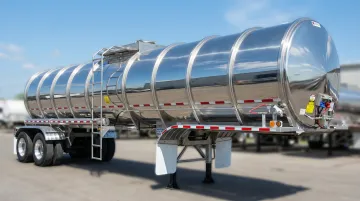
Tank Trailers (Tankers)
Tankers transport liquids and gases in sealed cylindrical containers. Material choice—aluminum, stainless steel, or specialized alloys—depends on cargo chemistry and temperature requirements.
Best suited for:
- Petroleum products (gasoline, diesel, oil)
- Chemicals and industrial liquids
- Liquid food products (milk, juice, cooking oil)
- Compressed gases and hazardous liquids
Key strengths:
- Safe containment of liquids and gases with sealed systems
- Cylindrical shape reduces pressure on tank walls
- Internal baffles prevent dangerous liquid surge during braking
- Available in insulated versions for temperature-sensitive liquids
- Compartmentalized tanks allow multiple product transport
Limitations:
- Requires specialized DOT certifications and CDL endorsements (N for tanker, H for hazmat)
- Limited to liquid and gas cargo only
- Expensive to purchase and maintain
- Hazmat tankers require additional safety compliance and driver training
- Smooth-bore (baffle-free) tanks for food-grade products increase surge risk
Typical specifications:
- Capacity: 5,000-11,000 gallons (most common: 7,000-9,500 gallons)
- Materials: Aluminum for petroleum, stainless steel for food-grade and corrosive chemicals
- Maximum gross weight: 80,000 lbs
- Compartments: 1-5 separate chambers depending on application
How to Choose the Right Semi Truck Trailer
Identify your primary cargo type first. This immediately narrows your options: dry goods and packaged freight require dry vans, perishables need reefers, bulk materials use dump trailers, and oversized equipment demands flatbeds or lowboys. Match cargo characteristics to trailer capabilities before considering other factors.
Evaluate loading and unloading infrastructure. Rear-only access trailers (dry vans, reefers) require dock-height facilities at both pickup and delivery locations. If job sites lack docks or operate at ground level, flatbeds with 360-degree access or dump trailers with hydraulic unloading eliminate the need for forklifts and loading equipment.
Match Trailer Specs to Your Cargo
Measure cargo dimensions and weight precisely. Record maximum height, width, length, and weight of typical loads, then compare against trailer specifications:
- Cargo 8.5 ft tall or less: Standard flatbed
- Cargo 8.5-10 ft tall: Step deck trailer
- Cargo 10-12 ft tall: Lowboy trailer
- Always stay within the 80,000-lb federal GVW limit and state-specific bridge formulas
Factor in Operating Costs and Compliance
Calculate total ownership costs, not just purchase price. Reefer units consume additional fuel for refrigeration, while tankers require expensive maintenance and specialized insurance. Factor in fuel consumption, maintenance frequency, insurance premiums, and driver qualification requirements.
Beyond purchase price, regulatory compliance adds ongoing costs. Food transport requires FSMA compliance with temperature monitoring and sanitation protocols. Hazmat tankers need DOT certifications, CDL endorsements (N and H), and periodic pressure testing. Oversized loads require state-specific permits that vary significantly across routes.
Consider frequency of use. Year-round, consistent operations justify purchasing equipment, while seasonal or project-specific needs favor renting or leasing.
Businesses entering the trailer market or expanding fleets often benefit from working with experienced dealers like Mideast Equipment Auctions, which offers inspected used trailers, financing options, and expert guidance to match equipment to specific hauling requirements.
Common Mistakes When Selecting a Semi Truck Trailer
Focusing solely on initial purchase price. Low upfront costs often mask higher long-term operating expenses. Reefer units require fuel for refrigeration systems, tankers demand specialized maintenance and insurance, and poorly maintained used trailers create unexpected repair costs.
Calculate total cost of ownership including fuel consumption, maintenance frequency, insurance premiums, and driver qualification requirements before making your purchase decision.
Ignoring loading infrastructure at pickup and delivery sites. Ordering a trailer requiring dock access when job sites only have ground-level access creates immediate operational problems. Survey actual loading conditions at frequent destinations before committing to rear-loading dry vans or reefers—flatbeds and dump trailers work without loading docks, making them more versatile for diverse job sites.
Overlooking regional regulations and permit requirements. Different trailer types face varying restrictions depending on your routes:
- Oversized loads require state-specific permits that change at borders
- A lowboy legal in Texas may need additional permits in California
- Tankers hauling hazmat need route-specific approvals
Research permit requirements for your primary routes before purchasing to avoid costly delays.
Buying new when quality used trailers deliver better value. Inspected used trailers from reputable dealers cost 40-60% less than new equipment while delivering comparable performance. Used trailers absorb steep first-year depreciation before you buy them, and many dealers offer financing options and shipping services for domestic and international buyers. Verified inspection reports help you avoid problematic units.
Conclusion
Semi truck trailers are specialized tools engineered for distinct cargo types, loading methods, and transportation requirements. Each type serves specific operational demands:
- Dry vans dominate general freight
- Flatbeds handle oversized materials
- Reefers protect perishables
- Lowboys transport tall equipment
- Step decks offer height flexibility
- Dump trailers move bulk materials
- Tankers contain liquids
Understanding trailer specifications, weight limits, and regulatory requirements is essential for operational efficiency and profitability.
The wrong trailer choice creates immediate problems: damaged cargo, compliance violations, infrastructure mismatches, and wasted fuel. The right choice maximizes payload capacity, reduces operating costs, and ensures regulatory compliance.
For businesses looking to purchase trailers, working with experienced equipment dealers like Mideast Equipment Auctions provides access to diverse inventory, competitive financing, and expert guidance. Their team helps match trailer types to specific hauling needs, offering used equipment at cost-effective prices compared to new purchases.
Frequently Asked Questions
What are the main types of semi truck trailers?
The seven primary types are dry vans (enclosed freight), flatbeds (open platform for oversized loads), reefers (temperature-controlled), lowboys (ultra-low deck for tall equipment), step decks (two-level design), dump trailers (hydraulic unloading), and tank trailers (liquid/gas containment). Each serves specific cargo and industry needs.
What are 18-wheeler and 53-foot semi truck trailers called?
"18-wheeler" refers to the combined tractor-trailer unit with 18 total wheels (10 on tractor, 8 on trailer). The 53-foot measurement describes standard trailer length for dry vans and reefers used in over-the-road freight transport.
Can you use a flatbed trailer for any type of cargo?
No. Flatbeds work best for oversized, heavy, or irregularly shaped cargo. They're unsuitable for weather-sensitive goods, small items prone to theft, temperature-controlled products, or cargo needing protection from road debris.
What's the difference between a lowboy and a step deck trailer?
Lowboys have a single ultra-low deck (18-24 inches high) for extremely tall equipment up to 12 feet, maximizing height clearance. Step decks have two levels—upper and lower decks at different heights—offering flexibility for moderately tall cargo up to 10 feet.
Do I need special licensing to haul refrigerated or tank trailers?
Reefer trailers need only a standard Class A CDL. Tank trailers require a tanker endorsement (N), and hazmat loads need an additional hazmat endorsement (H). Both require specialized training and testing.
Should I buy or rent a semi truck trailer for my business?
Purchase makes sense for consistent, year-round use with predictable cargo types. Rent or lease for seasonal demand or one-time projects. Quality used trailers from dealers like Mideast Equipment Auctions offer a cost-effective option with financing available.