Introduction
Many construction companies, contractors, and equipment dealers struggle with a common challenge: converting surplus equipment into cash without the hassle of private sales. Consignment auctions address this problem by partnering you with professional auction houses that handle marketing, buyer qualification, and transactions on your behalf—you only pay commission when items sell.
This guide is specifically for construction companies, contractors, equipment dealers, and agricultural operations looking to liquidate heavy equipment efficiently.
While the equipment industry uses consignment auctions extensively, many owners don't fully understand how the process works, what factors determine success, or when this method delivers the best returns compared to alternatives like dealer trade-ins or private sales.
You'll learn the complete consignment auction process—from initial equipment evaluation through final payment—and discover the key factors that affect outcomes and when this method is most appropriate for your equipment disposition needs.
Key Takeaways
- Auction houses sell your equipment on commission, charging fees only when items meet your minimum price
- Gain professional marketing, qualified buyer access, and eliminate self-selling hassles
- Complete the process in 4-8 weeks from evaluation to payment
- Best for quality equipment with broad market appeal; less effective for highly specialized or low-value items under $5,000
- Success depends on equipment condition, market timing, realistic reserve prices, and selecting an auction house with the right buyer network
What Is a Consignment Auction?
A consignment auction is a selling arrangement where equipment owners (consignors) entrust their assets to an auction company (consignee) who markets, catalogs, and sells the items to the highest bidder. The owner receives proceeds minus an agreed commission, typically 10-25% depending on equipment value and services provided.
The outcome is straightforward: you convert unused or surplus equipment into cash without handling marketing, buyer negotiations, logistics, or payment collection. The auction house manages the entire sales process from start to finish.
Understanding how consignment stacks up against other selling methods helps you choose the best approach for your equipment.
How Consignment Differs from Other Selling Methods
Direct Sales:
- You handle everything—advertising, inquiries, negotiations, inspections, and payments
- Consignment transfers these responsibilities to professionals with established buyer networks
Dealer Trade-Ins:
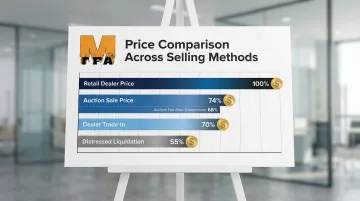
- Offer convenience and fixed pricing but typically yield 60-75% of fair market value
- Dealers must factor in reconditioning costs and profit margins
- Consignment auctions often achieve 72-76% of dealer advertised prices through competitive bidding
Liquidation Auctions:
- Typically involve entire business inventories sold under distressed circumstances
- Consignment focuses on individual equipment pieces or small fleets sold under normal conditions
- Avoids the stigma that depresses liquidation prices
The No-Risk Advantage
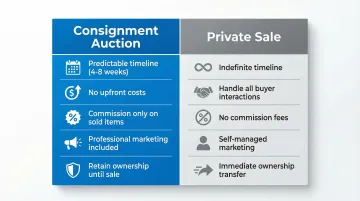
Consignment auctions operate on a performance basis: owners typically only pay commission on items that sell above the reserve price (your predetermined minimum). This means no upfront costs or financial obligations if equipment doesn't meet your acceptable price threshold.
Additionally, consignment auctions operate on scheduled dates (monthly or quarterly), providing predictable timelines compared to the indefinite waiting period of private sales where equipment might sit unsold for months.
Why Consignment Auctions Are Used for Equipment Sales
The equipment auction market is experiencing strong growth, projected to expand at 6.4% annually through 2031. This growth is driven by the shift from conventional onsite methods to online platforms that enable broader participation.
Major auctioneers now process billions in transactions annually, proving auctions are a primary sales channel rather than a last resort.
Value Realization: Competitive Returns
Historical data indicates average auction prices run approximately 72-76% of dealer advertised prices, with industry forecasts suggesting this gap could narrow to 10-15% as buyer comfort with auctions increases. This contrasts favorably with dealer trade-ins, which often yield lower net returns after accounting for dealer overhead and margin requirements.
These competitive pricing dynamics reflect what today's equipment buyers increasingly expect from the market.
What Equipment Markets Demand
Equipment buyers increasingly expect:
- Transparent pricing through competitive bidding rather than unclear dealer negotiations
- Access to multiple qualified buyers simultaneously, creating market-driven pricing
- Verified equipment condition through professional inspection and detailed documentation
- Efficient transactions with clear terms, defined timelines, and secure payment processing
Common Problems Without Consignment Auctions
Equipment owners who attempt private sales frequently encounter:
- Equipment sitting unsold for months while tying up capital and storage space
- Time wasted fielding unqualified buyer inquiries and scheduling individual inspections
- Lowball offers from single buyers who know you have limited alternatives
- Safety and liability concerns from allowing strangers onto your property for private showings
- Payment risks from buyers with uncertain creditworthiness
Consignment auctions solve these problems. They leverage professional marketing reach, pre-qualified buyer databases, and standardized processes that protect both parties.
How the Consignment Auction Process Works
The consignment auction process follows a structured sequence designed to maximize equipment value. Understanding each step helps you know what to expect when selling construction equipment, trucks, or farm machinery through auction.
High-Level Overview
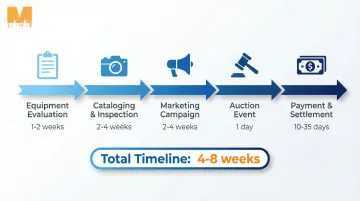
The process follows five key stages:
- Equipment owners submit items for evaluation
- Auction house assesses and accepts suitable equipment
- Items are cataloged and marketed to buyer database
- Auction event generates competitive bidding
- Winning bidders pay while consignors receive proceeds
Required Inputs from Owners
To begin the process, you provide:
- Equipment details: Make, model, serial numbers, hours/mileage, condition assessment, and location
- Ownership documentation: Clear title or proof of ownership, lien information if applicable
- Realistic expectations: Understanding of current market conditions and comparable sale values
- Equipment access: Availability for inspection, photography, and potential buyer viewing
Marketing Your Equipment
Auction houses convert your individual equipment into professionally marketed lots by:
- Creating detailed catalogs with specifications and condition reports
- Reaching thousands of potential buyers through email databases — some auction houses maintain subscriber lists exceeding 35,000 active buyers, online platforms, and international networks
- Enabling competitive bidding that establishes true market value rather than negotiated pricing
Process Controls
Several mechanisms protect both buyers and sellers:
- Reserve prices: Your minimum acceptable price protects against undervaluation
- Auction terms and conditions: Standardized contracts protect both parties
- Buyer qualification requirements: Pre-registration and deposit requirements ensure serious bidders
- Commission agreements: Clear fee structures established before consignment
What Changes
The auction completes three key transfers. Equipment ownership moves from you to the winning bidder. You receive cash proceeds, typically within 10-35 days after the auction closes.
The auction house earns commission for marketing services, buyer qualification, and transaction management.
Step 1: Equipment Evaluation and Consignment Agreement
The consignment process begins when you contact an auction house with equipment details. The auction house evaluates whether items are suitable based on condition, market demand, and value.
You and the auction house then agree on terms including commission rate (typically 10-25%), reserve prices, and auction date.
Required Documentation
Standard documentation includes:
- Title and ownership proof demonstrating clear legal ownership
- Equipment specifications: year, make, model, serial numbers, hours/mileage
- Maintenance records showing service history that confirms condition and builds buyer confidence
- Photographs from multiple angles showing overall condition and any damage or wear
Once you submit this documentation, the evaluation phase typically takes 1-2 weeks. The auction house reviews your equipment details against their upcoming sale schedule to determine fit and timing.
Step 2: Cataloging, Inspection, and Marketing
After your equipment passes inspection, the cataloging phase begins. The auction house professionally photographs each item, creates detailed lot descriptions with specifications and condition reports, and assigns lot numbers for catalog organization.
This documentation process is critical—high-quality photos and accurate descriptions directly impact buyer confidence and bidding activity.
Marketing Campaign Launch
The marketing phase typically runs 2-4 weeks before the auction date and includes:
- Targeted email campaigns to extensive buyer databases—for example, Mideast Equipment reaches 35,000+ active subscribers
- Online platform listings across multiple auction sites and equipment marketplaces
- Industry publication advertising in trade journals and specialized media
- Social media promotion targeting equipment buyers and dealers
- International outreach to buyers in regions like Australia, the Middle East, and Central America
This comprehensive marketing approach ensures maximum exposure to both domestic and international buyers, increasing competition and driving higher final prices.
Step 3: Auction Event and Sale
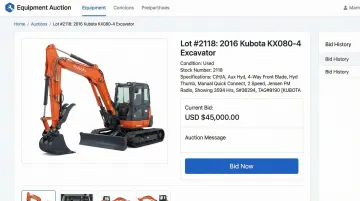
On auction day, qualified bidders compete for your equipment through multiple channels:
- In-person bidding: Traditional on-site participation
- Online bidding: Remote participation through digital platforms
- Hybrid bidding: Simultaneous in-person and online competition
All bidders must pre-register and often provide deposits before participating. The auctioneer facilitates competitive bidding until the highest bid is reached.
Sale Determination
If the final bid meets or exceeds your reserve price, the item is sold to that bidder. If bidding falls short of the reserve, the item remains unsold and returns to your ownership. Most auction houses charge no fees for unsold items, though some apply nominal listing fees.
Post-Auction Activities
Once your equipment sells, the process moves quickly:
Payment & Pickup (Days 1-7):
- Winning bidder completes payment within 48 hours
- Buyer arranges equipment pickup or shipping
- Auction house processes transaction documentation
Settlement (Days 10-35):
- You receive net proceeds (gross sale price minus commission and fees)
- Timeline varies by auction house settlement schedule
- Most payments arrive within 10-35 days after auction close
Where Consignment Auctions Are Applied
Equipment Types Commonly Consigned
Construction Equipment:
- Excavators, dozers, loaders, backhoes
- Graders, scrapers, compactors
- Skid steers and compact equipment
Transportation Equipment:
- Commercial trucks, dump trucks, service trucks
- Trailers (flatbed, lowboy, dump, specialty)
- Delivery and utility vehicles
Agricultural Machinery:
- Tractors, combines, planters
- Implements (plows, harrows, cultivators)
- Hay equipment and irrigation systems
Industrial Equipment:
- Forklifts, pallet jacks, aerial lifts
- Generators, compressors, welders
- Manufacturing and processing machinery
Specialty Equipment: Cranes, pile drivers, drilling rigs, mining equipment, quarry machinery, and forestry tools also move through consignment channels regularly.
Lifecycle Points for Consignment
Owners typically consign equipment at specific business moments:
- Replacing older fleet units with newer models
- Systematic disposal of aged assets during replacement cycles
- Reducing operations or exiting the industry entirely
- Post-harvest or end-of-season turnover
- Completing projects that required specialized machinery
- Estate settlements following retirement or death
- Lenders recovering value from defaulted loans
Common Triggers for Choosing Consignment
Organizations typically select consignment auctions when specific selling conditions favor the auction format:
- Company policy requires competitive sale processes for asset sales
- Multiple pieces need liquidation simultaneously
- Private buyer searches have failed to produce qualified offers
- Tax year-end requires documented asset sales
- International buyer markets offer better pricing than local demand
- Professional marketing reach justifies commission costs
Key Factors That Affect Consignment Auction Success
Equipment Condition and Maintenance History
Well-maintained equipment with documented service records commands premium prices. Machines with unknown maintenance history or visible damage struggle to meet reserves and may sell at significant discounts.
Comprehensive photo documentation—at least 20 detailed images—leads to faster sales at higher prices by allowing remote buyers to verify condition and reduce their risk discount. Simple investments in appearance—cleaning, painting, and minor repairs—often result in higher final sale prices that exceed the preparation costs.
Market Timing and Seasonality
Beyond equipment condition, timing plays a crucial role in maximizing auction returns. Auction values fluctuate based on industry cycles and economic conditions.
Construction equipment sells best in spring before the building season when contractors are preparing for active projects. Inventory levels have trended upward, with some categories like wheel loaders seeing increases of over 32% year-over-year, which can impact value retention.
Agricultural equipment moves best in fall and winter before planting season. Equipment like combines and planters showed auction value increases in January 2026, aligning with post-harvest disposition cycles when farmers liquidate older equipment.
Experienced auction houses schedule sales to optimize timing based on these seasonal patterns and current economic conditions.
Reserve Price Strategy
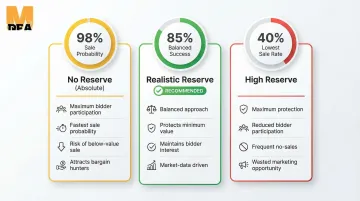
Setting reserves requires balancing protection against undervaluation with the need to attract serious bidders.
Reserves set too high result in no-sales, wasted marketing opportunity, and potential re-listing fees. High or undisclosed reserves discourage bidder participation when buyers feel equipment is overpriced or unattainable.
No-reserve (absolute) auctions maximize sale probability and attract larger bidder pools due to the "allure of a deal." Competitive bidding often drives prices higher than expected, though sellers risk selling below anticipated value.
Realistic reserves provide safety nets while maintaining bidder interest. Experienced auction houses help establish reserves based on current market data, comparable sales, and equipment condition.
Auction House Reputation and Buyer Network
Your choice of auction partner matters as much as your pricing strategy. Not all auction houses deliver equivalent results.
Key differentiators include:
- Houses with established databases reaching 35,000+ qualified buyers (like Mideast Equipment Supply's weekly email list) generate more competitive bidding than those with limited reach
- Companies with global networks spanning Australia, the Middle East, and Central America expose equipment to broader markets where demand and pricing may exceed domestic levels
- Auction houses specializing in construction, agricultural, or industrial equipment maintain buyer networks specifically interested in those categories, producing better results than generalist auctioneers
- Houses utilizing multiple platforms (email, online marketplaces, trade publications, social media) generate more exposure and competitive bidding
International buyers accounted for 24% of excavator sales and 16% of articulated dump truck sales at major auctions, demonstrating significant international demand that specialized auction houses can tap into.
Equipment Location and Logistics
Items located in accessible areas with good transportation infrastructure are easier for buyers to inspect and remove, reducing buyer concerns about retrieval costs. Remote locations may require additional marketing efforts to offset logistical challenges, or may require transporting equipment to central auction yards to maximize accessibility and buyer interest.
Common Issues and Misconceptions
"Auction Means Desperate Sale"
Many owners worry that selling through auction signals financial distress and depresses prices. This isn't true for quality consignment auctions, which attract serious buyers willing to pay market rates.
The stigma applies to forced liquidations under bankruptcy or foreclosure—not strategic sales of surplus equipment.
Major companies now use consignment auctions as standard practice for selling equipment, incorporating them into formal asset management policies.
Commission Structure Confusion
Common commission misconceptions include:
- Seller commission: Ranges from 10-25% depending on equipment value and services provided, but applies only to successful sales—you pay nothing if equipment doesn't meet reserve
- Buyer's premium: Typically 10-15% added to winning bids, affecting total acquisition cost and bidding strategy
- Full hammer price expectations: Many sellers don't realize the winning bid amount isn't their final proceeds
"All Auction Houses Deliver the Same Results"
Auction houses aren't interchangeable. Buyer network, marketing reach, and industry expertise directly impact your results.
A specialized house with 35,000+ construction equipment subscribers will outperform a generalist with a smaller database when selling excavators or dozers. Houses with international networks can also access markets where demand and pricing exceed domestic levels.
Equipment Will Sell for Retail Value
Auctions establish wholesale or fair market value based on competitive bidding, typically 15-25% below retail prices advertised by dealers. While this represents a discount from retail, auction values typically exceed dealer trade-in offers and eliminate the time and effort required for private sales.
Set realistic expectations: equipment may sell below replacement cost while still achieving fair market value.
When Consignment May Not Be Appropriate
Low-Value Equipment
Extremely low-value equipment (under $5,000) may not justify consignment auction costs. When commission and effort exceed potential returns, direct sales to known buyers or donations for tax deductions often work better.
Highly Specialized Equipment
Equipment with limited buyer pools—such as highly specialized industrial machinery or niche agricultural implements—often sells faster through industry-specific channels, direct outreach to known users, or manufacturer buy-back programs rather than general auctions.
Urgent Timeline Requirements
Consignment requires a 4-8 week cycle from agreement to payment.
If you need immediate cash or must clear equipment within days, direct sale to a dealer or equipment buyer offering immediate payment works better, even if the price is lower.
Equipment Requiring Expensive Repairs
If equipment needs costly repairs to become sellable, the repair investment may not generate enough value increase to justify the expense.
Selling "as-is" through alternative channels or parting out valuable components often yields better net returns.
Unclear Title or Ownership Issues
Consignment auctions require clear title transfer. Equipment with unresolved liens, disputed ownership, or incomplete documentation should resolve these issues before consignment, or use alternative selling methods that work with title issues.
When Alternatives Work Better
In these situations, consider these alternatives to consignment:
Direct Sale to Known Buyer: If a trusted buyer offers an acceptable price, direct sale saves time and commission while ensuring a certain outcome.
Dealer Trade-In: When purchasing replacement equipment, trade-ins offer convenience and potential tax advantages despite lower net value.
Donation: When equipment value is minimal but tax deduction is valuable, donation to qualified organizations can provide better financial outcomes than auction sales.
Choosing consignment simply because "that's what we always do" without evaluating current market conditions, equipment condition, or alternative methods represents default thinking rather than strategic decision-making.
Conclusion
Consignment auctions provide a professional, efficient method to convert surplus equipment into cash by using auction house expertise, marketing reach, and buyer networks to achieve competitive market pricing.
The structured process—from initial evaluation through cataloging, marketing, auction event, and final settlement—typically delivers results within 4-8 weeks while eliminating the burden of private sales.
Understanding the complete process helps equipment owners set realistic expectations about timelines, pricing, and outcomes. Success requires matching the right equipment with the right auction house at the right time, rather than assuming all auctions deliver equivalent results.
Key success factors include:
- Equipment condition and complete documentation
- Strategic market timing for your equipment type
- Realistic reserve pricing based on current market data
- Selecting an auction house with the appropriate buyer network—particularly one with international reach spanning markets like Australia, the Middle East, and Central America where demand may exceed domestic pricing
For construction companies, contractors, equipment dealers, and agricultural operations looking to liquidate quality equipment with broad market appeal, consignment auctions offer a compelling alternative to dealer trade-ins and private sales.
These auctions typically achieve 72-76% of retail pricing while eliminating the hassle of managing the sale yourself.
Frequently Asked Questions
What does consignment mean in auctions?
Consignment means you entrust your equipment to an auction house who sells it on your behalf. You retain ownership until the item sells, paying commission only if it reaches your agreed minimum price (reserve).
What is the main difference between consignment and a regular sale?
In a regular sale, you handle all marketing and buyer interactions yourself. Consignment transfers these responsibilities to the auction house, who uses their buyer network and marketing infrastructure in exchange for commission.
How much commission do consignment auctions typically charge?
Commission rates typically range from 10-25% of the final sale price, varying based on equipment value (higher value items often receive lower rates), services provided, and whether the auction house also charges a buyer's premium. Some houses use tiered structures where commission decreases as sale price increases.
How long does the consignment auction process take from start to payment?
The typical timeline is 4-8 weeks total: 1-2 weeks for evaluation and consignment agreement, 2-4 weeks for cataloging and marketing before the auction, the auction event day itself, and then 10-35 days post-auction for buyer payment processing and consignor settlement. Some auction houses settle faster (10-14 days) while others follow standard 3-week schedules.
What happens if my equipment doesn't sell at the consignment auction?
If bidding doesn't reach your reserve price, the item remains unsold and returns to your ownership. Most auction houses charge no commission on unsold items, though some may charge nominal listing or administrative fees. You can then relist at the next auction with an adjusted reserve, pursue alternative sale methods, or retain the equipment.
Can I sell equipment internationally through consignment auctions?
Yes, many established auction houses maintain international buyer networks and facilitate export sales. International buyers accounted for 24% of excavator sales at major auctions, demonstrating significant global demand.