
Introduction
Selling heavy equipment through auctions or private sales involves significant financial stakes, yet many contractors overlook one step that dramatically impacts returns.
Equipment condition uncertainty suppresses buyer confidence and final sale prices. Excavators with verified condition data command median prices up to 53% higher than comparable units lacking documentation ($72,500 vs. $47,500).
A pre-sale inspection is a proactive evaluation conducted before listing machinery for auction or sale. This assessment documents current condition, identifies potential issues, and provides transparent evidence that addresses buyer concerns.
The value becomes especially clear when approximately 16% of heavy equipment auction buyers are international and cannot physically inspect before bidding.
Here's what you need to know: what pre-sale inspections entail, when they deliver measurable value, how the process works from inspector selection through pricing strategy, and pitfalls that undermine sale outcomes.
Key Takeaways
- Pre-sale inspections document equipment condition before listing
- Reduces buyer risk and eliminates negotiation friction over hidden issues
- Accelerates sales with realistic pricing and transparent marketing materials
- Hire qualified inspectors, review reports, then decide on repairs or price adjustments
- Skip for brand-new machinery, rebuild projects, or high-demand markets with immediate sales
- Inspection costs typically run under 3% of asset value for equipment over $30,000
What Is a Pre-Sale Equipment Inspection?
A pre-sale inspection is a thorough evaluation of equipment condition conducted before listing. It covers mechanical systems, structural integrity, operational functionality, and compliance status.
Unlike basic condition reports that provide surface-level assessments, these inspections involve diagnostic testing, fluid analysis, and load verification to uncover hidden issues.
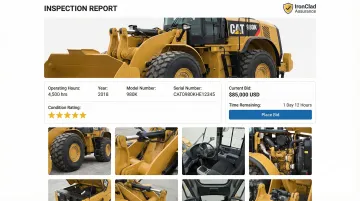
This evaluation produces a detailed condition report documenting current state, identifying defects or wear, and estimating repair costs. The report includes photographic and video evidence for transparency.
Industry-standard inspections align with ISO/IEC 17020 requirements, which specify competence standards for inspection bodies and ensure objective assessments.
Types of Pre-Sale Inspections
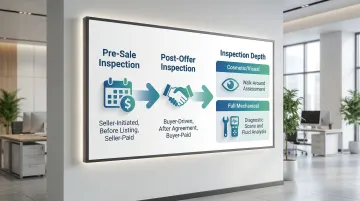
Key distinctions:
- Pre-sale vs. post-offer inspections: Pre-sale evaluations happen before listing and are seller-initiated; post-offer inspections occur after agreement and are buyer-driven
- Cosmetic vs. mechanical: Walk-around assessments document visible condition; full mechanical inspections include diagnostic scans, fluid sampling, and operational testing under load
- Optional vs. mandatory: Pre-sale inspections are seller-paid and voluntary, unlike buyer due diligence inspections that are standard practice in equipment transactions
For example, Caterpillar's Certified Used program requires a 140-point inspection covering visual checks, operational testing, and fluid health analysis—representing the gold standard for comprehensive equipment evaluation.
Why Pre-Sale Inspections Matter for Equipment Sellers
Pre-sale inspections address the fundamental trust gap in equipment markets, particularly for remote buyers who cannot physically verify condition claims.
The financial impact is substantial—transparent condition data correlates directly with higher final sale prices and faster transaction cycles.
Market Impact and Buyer Confidence
Equipment with verified condition documentation consistently outperforms comparable units lacking transparency. The 53% price premium for documented excavators reflects buyers' willingness to pay more when third-party verification reduces risk.
This advantage becomes even more pronounced for high-value machinery, where uncertainty can suppress bids by 10-20% or more.
For auction houses like Mideast Equipment Auctions, pre-inspected equipment builds buyer confidence across their 35,000-strong network. International buyers who cannot travel to preview equipment rely entirely on inspection reports, photographs, and video documentation.
Without comprehensive condition data, these remote bidders either skip the listing entirely or submit conservative bids that account for unknown risks.
Common Deal-Breakers
Certain defects significantly impact buyer confidence and can derail equipment sales when discovered late in the process:
- Major hydraulic leaks or pump failures requiring system-wide repairs
- Structural cracks in booms, frames, or undercarriages that compromise safety
- Hour meter tampering where readings don't match physical wear patterns or ECU data
- Undisclosed accident history revealing frame damage or improper repairs
- Emissions compliance failures making equipment unsellable in regulated markets
These deal-breakers hit hardest in the 4-6 year equipment range, where undocumented hydraulic wear and hour discrepancies drive sharp depreciation.
Third-party inspections identify these issues before they become negotiation obstacles or cause deals to collapse entirely.
Industry Standards and Marketing Value
Condition assessments have shifted from optional to increasingly standard practice for high-value equipment. Major auction platforms now perform over 100,000 inspections annually, signaling that professional buyers expect detailed reports as a baseline requirement.
Beyond preventing deal-breakers, inspection reports become valuable marketing collateral that differentiates your listing in competitive markets. Detailed documentation demonstrates professionalism, reduces perceived risk, and justifies premium pricing—particularly important when selling through auctions where multiple similar units compete for bidder attention.
The Pre-Sale Inspection Process: What to Expect
The inspection process follows a structured workflow designed to produce credible, comprehensive documentation that backs both pricing strategy and buyer confidence.
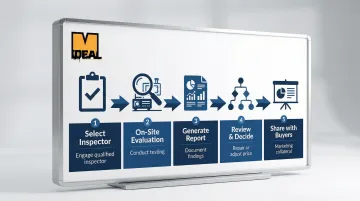
High-level flow:
- Seller engages qualified inspector and defines scope
- Inspector evaluates equipment on-site with operational testing
- Inspector generates detailed report with findings and photographic evidence
- Seller reviews results and decides on repairs or pricing adjustments
- Report is shared with potential buyers as sales documentation
The inspection covers both documentation and physical condition.
What inspectors examine:
- Equipment specifications and model details
- Maintenance records and service history
- Hour meter readings cross-referenced with physical wear
- Visual condition of all major components
- Operational history and usage patterns
Core inspection activities:
- Visual examination of structural elements and wear points
- Operational testing under load conditions
- Diagnostic scans reading fault codes and system data
- Fluid sampling for laboratory analysis
- Load testing to verify capacity and performance
- Safety system verification (ROPS/FOPS, braking, alarms)
Step 1: Select Qualified Inspector and Define Scope
Report credibility depends on inspector qualifications. Look for:
Qualified inspector sources:
- OEM-certified technicians trained by manufacturers like Caterpillar or John Deere
- Independent inspection firms with ISO/IEC 17020 accreditation
- Industry association directories (AED, Associated Equipment Distributors)
- Auction house inspection services with documented standards
Credentials to verify:
- Manufacturer-specific certifications for your equipment brand
- Years of hands-on experience (20+ years is typical for leading services)
- Third-party accreditation ensuring independence and competence
- Insurance coverage protecting against errors or omissions
Defining inspection scope:
Base your scope decision on equipment type, age, value, and target buyer expectations.
A basic visual inspection may suffice for newer equipment with documented service history. High-value or older machinery benefits from comprehensive diagnostic testing including fluid analysis and load verification.
Step 2: Conduct On-Site Inspection and Testing
On inspection day, the process moves through visual, operational, and diagnostic phases.
Visual walk-around:
- Exterior condition, paint, and bodywork
- Structural integrity checking for cracks or repairs
- Wear patterns on tracks, tires, or undercarriage
- Hydraulic hoses, cylinders, and connections
- Operator station, controls, and safety features
Once visual assessment is complete, operational testing begins.
Operational testing:
- Engine start and run quality with clear audio documentation
- Transmission engagement through all gears
- Hydraulic function testing under load
- Steering, braking, and control responsiveness
- All operational modes and attachments
Diagnostic evaluation follows functional testing.
Diagnostic evaluation:
- ECU scans reading active and historical fault codes
- Hour meter verification against electronic records
- Fluid sampling from engine, transmission, and hydraulics
- Pressure testing of hydraulic and pneumatic systems
- Emissions system verification for compliance
Inspectors capture findings through multiple formats.
Documentation requirements:
- 15-25 high-resolution photographs from all angles
- Video footage showing engine operation and functional testing
- Component ratings using standardized scales (Good/Fair/Poor)
- Detailed notes on any defects, wear, or needed repairs

Step 3: Review Report and Make Strategic Decisions
The inspection report provides data for critical pricing and marketing decisions:
Interpreting findings:
- Critical issues: Structural damage, major system failures, or safety violations requiring immediate disclosure and price adjustments
- Moderate concerns: Worn components needing replacement soon, minor leaks, or cosmetic damage affecting appeal
- Minor issues: Normal wear consistent with age and hours
- Routine items: Issues easily addressed with standard maintenance
Strategic decision framework:
- Make repairs before listing when fixes are inexpensive relative to the value increase they enable
- Adjust pricing/reserve when repair costs exceed the likely price benefit or when selling as-is makes strategic sense
- Transparent presentation using inspection findings as marketing proof of honest disclosure and realistic pricing
For equipment being sold through Mideast Equipment Auctions' network, inspection reports help set realistic reserve prices based on actual condition rather than assumptions.
Transparent documentation may also justify higher reserves by reducing buyer risk and demonstrating honest disclosure.
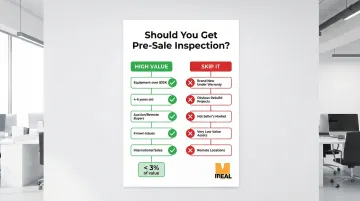
When Pre-Sale Inspections Make Sense (And When They Don't)
Pre-sale inspections make financial sense in specific situations but represent unnecessary cost in others.
High-Value Scenarios
Inspections provide strong ROI when:
- Equipment over $30,000 where inspection costs typically run under 3% of value
- Machinery aged 4-6 years experiencing sharp depreciation that condition transparency can mitigate
- Selling through auctions to remote buyers who cannot physically inspect before bidding
- Equipment with known or suspected issues where transparent disclosure prevents deal collapse
- Tight sale timelines where delays from buyer-discovered issues would be costly
- International sales where buyers rely entirely on documentation for purchasing decisions
Low-Value Scenarios
Skip inspections when:
- Brand-new equipment under warranty where condition is already verified by manufacturer
- Obvious rebuild projects or parts machines marketed explicitly as-is with no operational claims
- Extremely hot seller's markets where equipment sells immediately regardless of condition documentation
- Very low-value assets where inspection costs approach 5-10% of equipment value
- Equipment in remote locations where qualified inspectors are scarce and travel costs are prohibitive
Practical Constraints
Some constraints limit inspection effectiveness:
- Seasonal timing issues — frozen ground prevents undercarriage assessment or operational testing
- Equipment inoperability — functional testing impossible without repairs first
- Lack of qualified inspectors — specialized equipment types may have few available experts
- Rushed timelines — insufficient time for thorough evaluation and lab analysis
The decision should reflect clear strategic reasoning and cost-benefit analysis rather than blanket policy. Consider your target buyer's concerns, the competitive landscape, and whether transparency will meaningfully impact sale price. Condition documentation matters most when it directly addresses buyer hesitation or accelerates transactions.
Common Misconceptions and Pitfalls to Avoid
Understanding what pre-sale inspections can and cannot accomplish prevents costly mistakes and unrealistic expectations.
Misconception: Inspections Guarantee No Buyer Pushback
Pre-sale inspections reduce buyer concerns but don't eliminate all pushback. Buyers may conduct their own inspections and find different issues, interpret findings differently, or use inspection results as negotiation leverage.
Different inspectors have varying thoroughness levels, and specific operating conditions during use can reveal issues not visible during a standard inspection.
Critical Requirement: Honest Disclosure
Attempting to hide known defects creates legal liability and damages reputation, especially in auction contexts where condition representations matter.
The legal framework is clear: Under the Uniform Commercial Code, "as-is" clauses don't protect sellers from fraud or active concealment of known material defects. Sellers must disclose inspection findings honestly, even when results are unfavorable.
False Assumption: Inspections Eliminate All Surprises
Equipment condition can change between inspection and sale, particularly for machinery that continues operating during the marketing period. Inspections provide a snapshot of condition at a specific point in time, not a permanent guarantee.
Beyond that, hidden defects may exist that even thorough inspections cannot detect without complete disassembly.
Quality Variability Risk
Not all inspections are equal. A basic "condition report" covering only cosmetic items differs dramatically from a comprehensive mechanical inspection with diagnostic testing and fluid analysis. Sellers must understand what their inspection includes and ensure the scope matches buyer expectations for their equipment category and price point.
Frequently Asked Questions
What are major red flags in equipment pre-sale inspections?
Major red flags include structural cracks requiring $50,000+ repairs, hydraulic or transmission failures, hour meter tampering, undisclosed accident damage, and emissions system failures. These issues can suppress pricing by 10-20% or kill deals entirely.
Can you trust pre-inspection reports from sellers?
Reports from ISO/IEC 17020-accredited third-party inspectors are generally reliable due to independence requirements and professional liability. Always verify credentials, review photographic evidence, and conduct due diligence on high-value purchases.
How should I prepare equipment for pre-sale inspection?
Clean equipment thoroughly, gather all maintenance records, ensure it's operational with charged batteries and fuel, and provide full system access. Dead batteries prevent critical functional testing, so ensure everything is ready for comprehensive evaluation.
Do I need a pre-sale inspection if my equipment still runs?
Yes—operational equipment can have hidden issues like excessive wear or fluid contamination. For equipment over $30,000, inspection costs (under 3% of value) are minimal compared to the price premium from verified condition data.
How does a pre-sale inspection affect my auction reserve price?
Inspection findings help set realistic reserves based on actual condition. Transparent reports may justify higher reserves by reducing buyer risk. Mideast Equipment Auctions can advise on reserve strategies using market data and inspection results.
What's the difference between a condition report and a full mechanical inspection?
Condition reports provide visual assessment and operability verification—suitable for newer equipment. Full mechanical inspections include ECU scans, fluid analysis, load testing, and detailed evaluation—appropriate for high-value or older machinery.